Desk & Office Worker Relief in Melbourne
Assisted Stretch Therapy at StretchWell for Desk & Office Workers
If you spend most of your day at a desk, you're far from alone — and you're probably familiar with the tightness that builds up by mid-afternoon: a stiff lower back, rounded shoulders, a tight neck, or hips that feel locked up the moment you stand.
You might notice:
A dull ache across your lower back by the end of the day
Shoulders that feel permanently rounded forward
Neck and shoulder tension, especially after long meetings or screen time
Tight hips that make standing up feel stiff and awkward
A general feeling of restriction that a weekend off doesn't fully fix
Can assisted stretching help office and desk workers? Yes — assisted stretching directly targets the hip flexors, chest, shoulders and lower back that tighten from long periods of sitting, helping ease tension and improve posture and mobility over time. Combined with regular movement through your workday, it's one of the most effective ways to counter the physical toll of desk work.
What is assisted stretching? Assisted stretching is a guided, one-on-one stretching session where a trained practitioner helps move your body through targeted stretches designed to improve mobility, flexibility, posture, and overall movement quality. Unlike stretching on your own, assisted stretching allows your muscles to fully relax while we safely help you access deeper, more effective stretches tailored to your body’s needs.
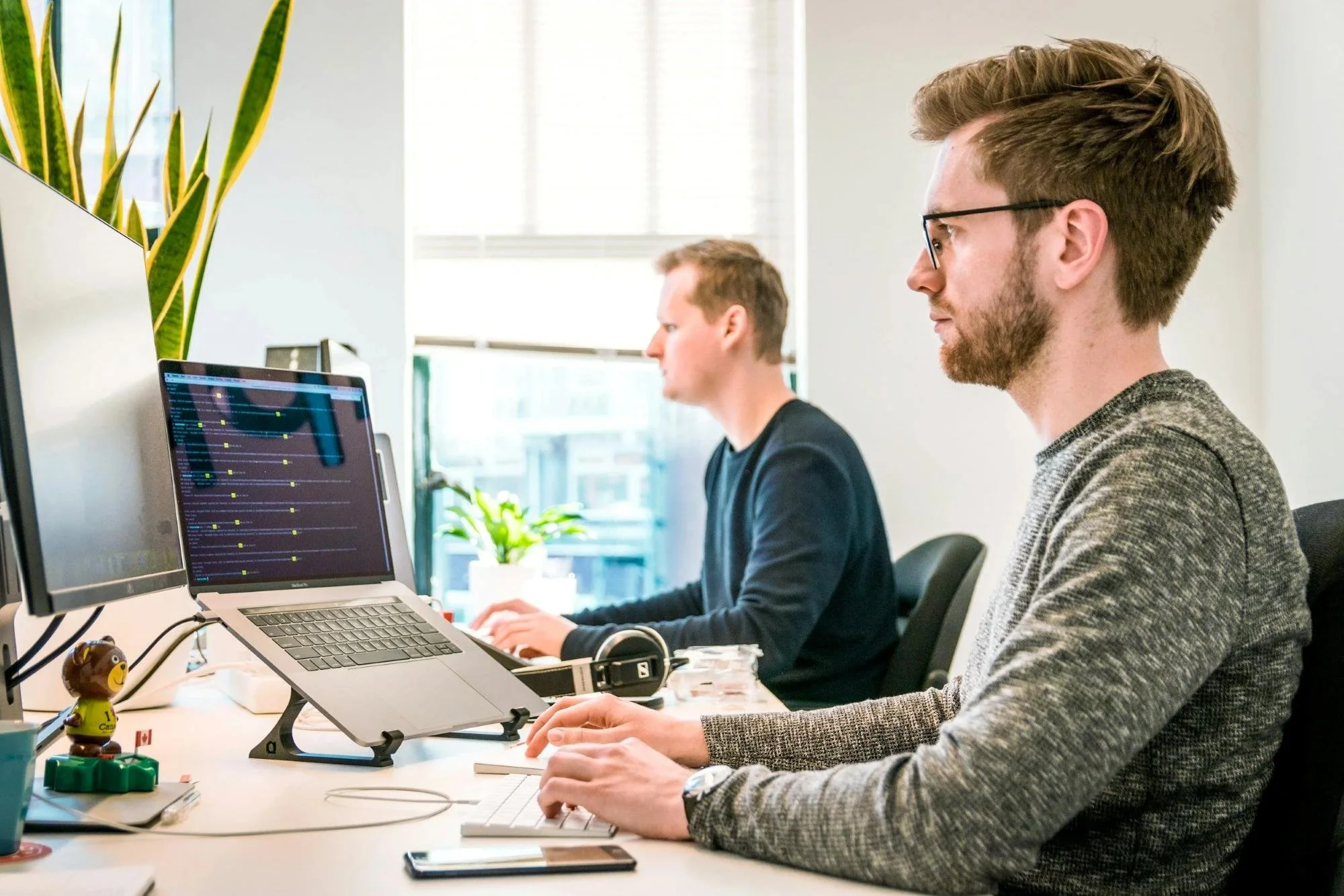
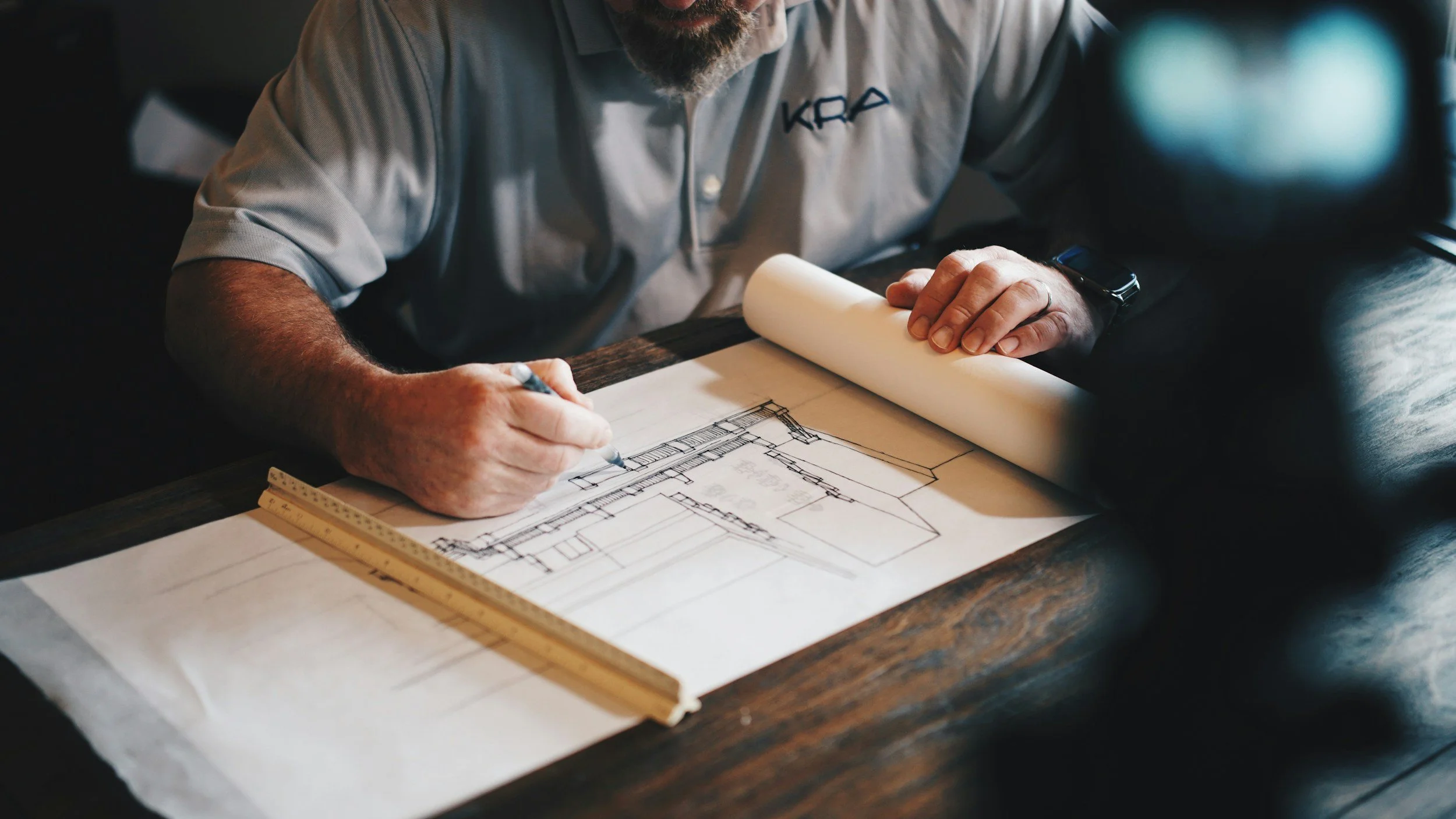
Why Desk Work Is So Hard on Your Body
Hip Flexors Shorten From Sitting
Hours in a seated position keep your hip flexors in a shortened position, which can tilt your pelvis and contribute to lower back strain.
Rounded Shoulders and Tech Neck
Looking down at a screen for hours pulls the shoulders forward and strains the neck — a pattern that compounds the longer you sit without a break.
The Lower Back Compensates
When your hips are tight, your lower back often takes on extra load to keep you upright, which is a major contributor to the end-of-day ache so many desk workers feel.
Lack of Movement Generally
The human body isn't built for eight-plus hours of stillness. Even with good posture, a lack of regular movement contributes to overall stiffness and reduced circulation.
Simple Desk Stretches You Can Try Right Now
These are safe, general stretches you can do at your desk between assisted stretching sessions. Stop if you feel any sharp pain.
1. Seated Hip Flexor Stretch Sit at the front edge of your chair, extend one leg back slightly and gently press your hips forward until you feel a stretch at the front of your hip. Hold 20–30 seconds each side.
2. Doorway Chest Opener Stand in a doorway with your forearm on the frame at shoulder height, and gently lean forward to open the chest and counter rounded shoulders. Hold 20–30 seconds each side.
3. Seated Spinal Twist Sitting tall, gently rotate your upper body toward one side, holding the back of your chair for a light stretch through your spine and lower back. Hold 15–20 seconds each side.
4. Chin Tucks for Tech Neck Gently draw your chin straight back without tilting up or down, holding 5 seconds and repeating 8–10 times to counter forward-head posture.
5. Standing Hamstring Reach Stand and hinge gently forward from the hips, letting your arms hang toward your feet, to release tension through the back of your legs and lower back. Hold 20–30 seconds.
For deeper, more targeted work on the areas that don't fully release with self-stretching — particularly the hips and lower back — that's where assisted stretching makes the real difference.
Why Self-Stretching at Your Desk Isn't Always Enough
Quick desk stretches genuinely help, but they have limits: it's hard to properly isolate tight hip flexors while seated, and a two-minute stretch between meetings rarely reaches the depth needed to actually shift tightness that's built up over months of desk work.
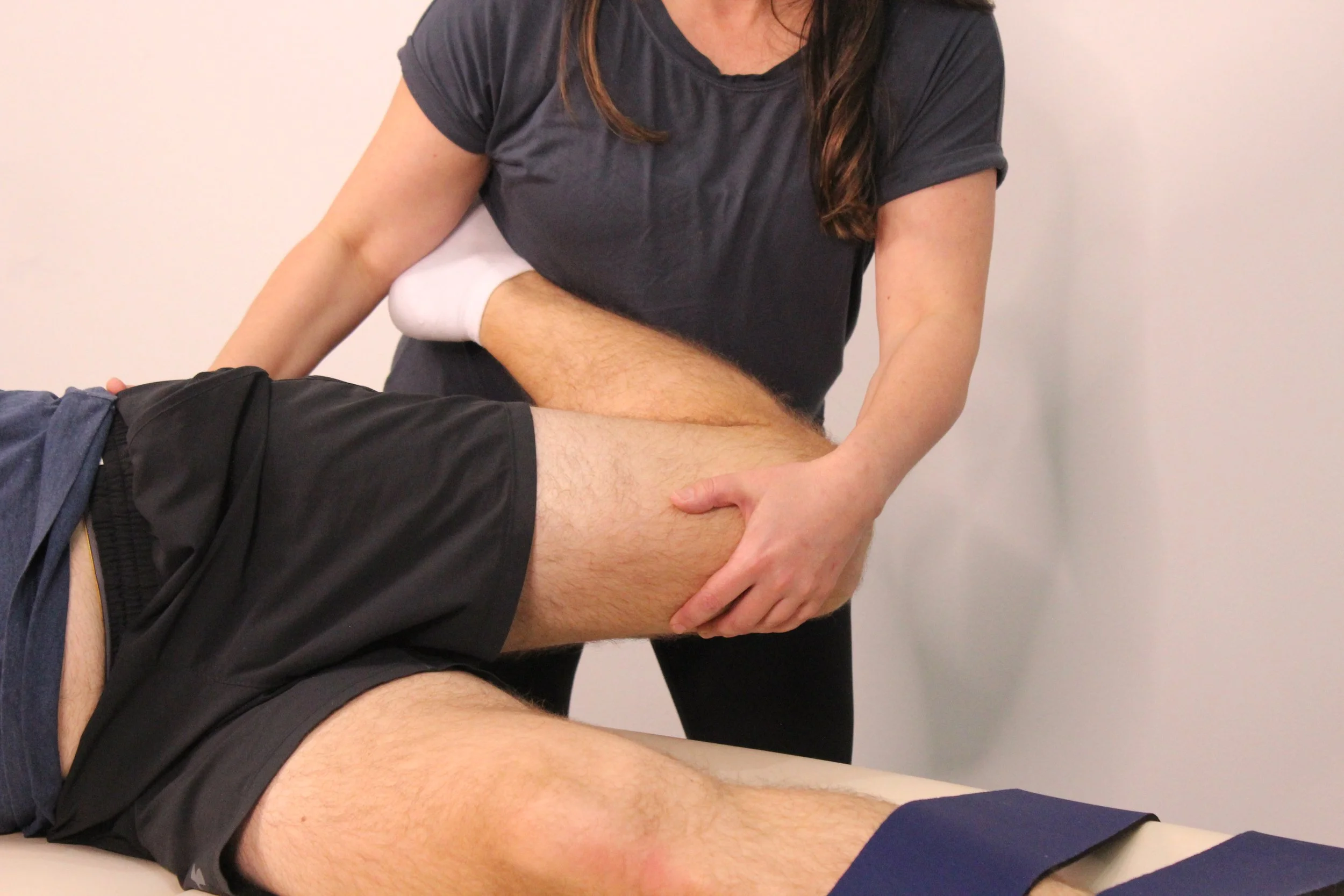
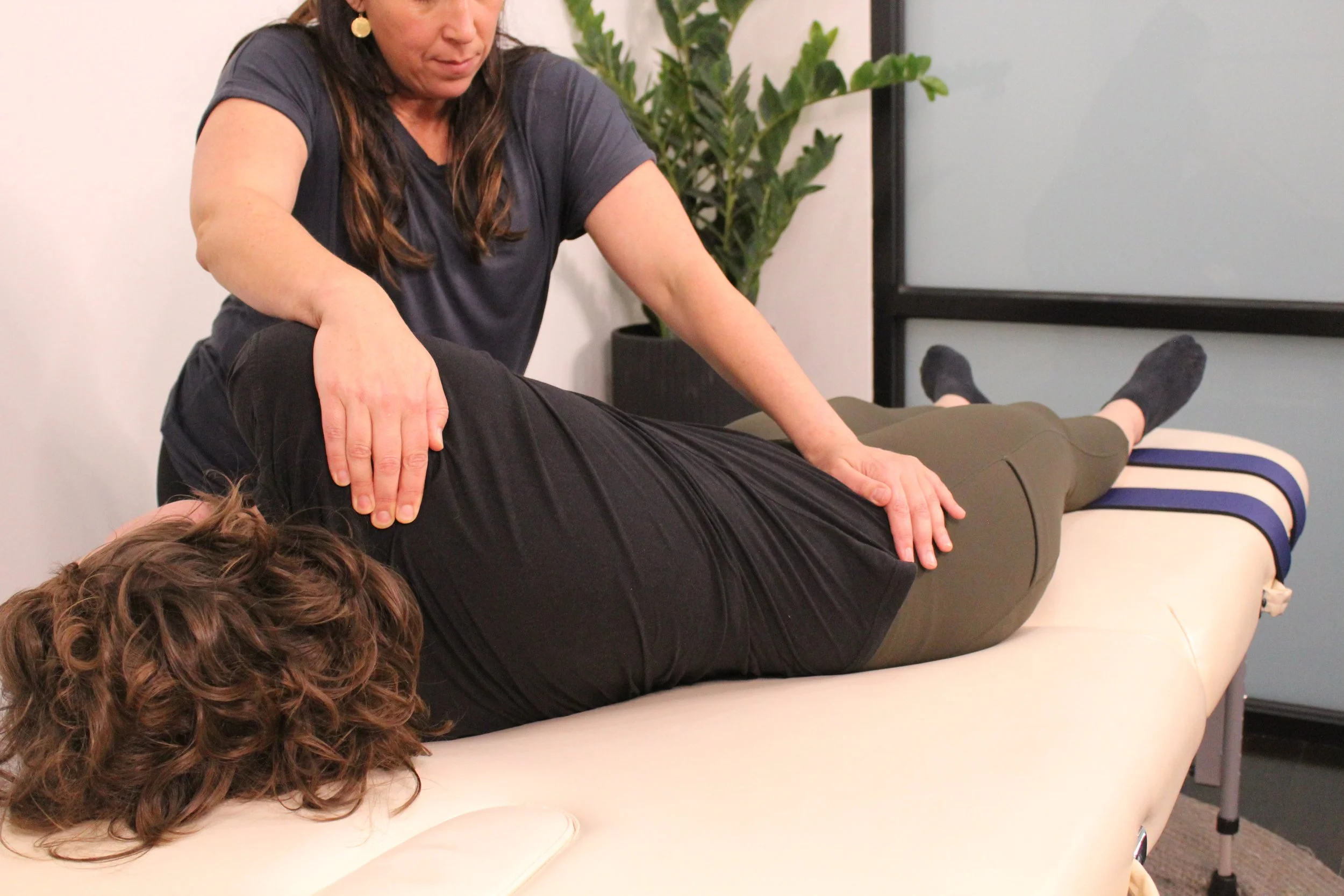
During an assisted stretching session, your therapist guides your body through a fuller, more targeted range of motion — properly releasing the hips, chest and lower back in a way that's genuinely difficult to replicate at your desk.
How Assisted Stretching Helps Office and Desk Workers
Hip Flexors
Guided stretching helps release the tightness that builds from sitting, supporting a more neutral pelvis position and reducing lower back strain.
Chest and Shoulders
Opening the chest and shoulders helps counter the rounded posture that comes from hours at a screen.
Lower Back
Addressing the hip and postural patterns that cause the lower back to compensate helps ease that familiar end-of-day ache.
Neck
Releasing tension through the neck and upper traps helps counter tech neck from long screen sessions.
The Science Behind Assisted Stretching for Desk Workers
Tightness from prolonged sitting isn't just about muscle length — your nervous system also adapts to repeated positions over time, which is part of why a quick stretch doesn't always undo months of desk-bound posture.
A trained stretch therapist uses slow, controlled movement to help your body properly release into positions that are hard to access through self-stretching alone. At StretchWell, we may also use Proprioceptive Neuromuscular Facilitation (PNF) techniques where appropriate, to support deeper, longer-lasting improvements in flexibility and posture.
Who can benefit?
Assisted stretching is ideal for people with sedentary or desk-based jobs, including:
Office workers
Corporate professionals
Remote workers / work-from-home employees
IT professionals and software developers
Accountants and finance professionals
Lawyers and legal assistants
Graphic designers and creatives
Marketing and advertising professionals
Executives and business owners
Teachers and university staff
Students studying long hours
Healthcare administrators
Real estate agents working from laptops and phones
Engineers and architects
Data analysts and researchers
Office Worker Relief in Northcote & Melbourne
StretchWell proudly services clients across:
Northcote
Brunswick
Fitzroy
Collingwood
Melbourne’s inner north
As more people in Melbourne prioritise recovery, mobility and long-term movement health, assisted stretching is becoming an increasingly popular part of modern office worker routines.

Feel better at your desk and beyond. StretchWell provides relief for tight hips, shoulders and backs.
If sitting all day is leaving you stiff, sore or stuck in a hunched posture, StretchWell can help you build lasting relief, not just a temporary fix.
Book your assisted stretching session today and give your body the reset your desk job doesn't.
FAQs about Office Worker Relief
Get relief after too many hours at your desk.
-
Long periods of sitting reduce movement in your hips, back, neck, and shoulders.
Over time, certain muscles stay in a shortened position while others become inactive, which can create that “tight and stiff” feeling. -
The most common areas are the neck, shoulders, hip flexors, hamstrings, and lower back.
These regions are affected by posture and prolonged sitting throughout the workday. -
Yes.
Regular stretching can help improve flexibility and joint range of motion, which may reduce the feeling of tightness from prolonged sitting. -
Assisted stretching allows your body to relax while a trained practitioner helps guide you into deeper, more controlled ranges of motion than most people can safely reach alone.
-
Even a small amount of regular mobility work can help.
Consistency matters more than intensity—short, regular sessions are often more effective than occasional long sessions. -
Yes — regular assisted stretching, especially targeting the hips, chest and shoulders, supports better overall posture over time, alongside movement habits like regular breaks and an ergonomic setup.
Related Blog Posts