How to Reduce Stiffness After a Long Flight
You've finally arrived at your destination, but instead of feeling refreshed, your body feels tight, stiff, and uncomfortable.
Your hips are aching, your lower back feels locked up, your neck is tight, and even walking through the airport feels harder than it should.
If this sounds familiar, you're not alone. Stiffness after a long flight is one of the most common complaints travellers experience, particularly after flights lasting more than a few hours.
The good news? There are several simple ways to help your body recover and feel better faster.
Why Do Long Flights Make You Stiff?
The main culprit is prolonged sitting.
When you're seated for hours at a time, your body remains in the same position with very little movement. Certain muscles shorten while others become inactive, joints move less, and circulation slows down.
The areas most commonly affected include:
Hamstrings
Glutes
Lower back
Chest muscles
Add dehydration, poor sleep, and the stress of travel, and it's easy to understand why your body feels less mobile after landing.
1. Start Moving As Soon As Possible
One of the best things you can do after a flight is simply walk.
Movement encourages circulation, helps lubricate joints, and reminds your body that it's no longer confined to an airplane seat.
Even a 10 to 20-minute walk after arriving can make a noticeable difference.
If you've just checked into your hotel or arrived home, resist the temptation to collapse onto the couch immediately. A short walk around the block may help your body feel significantly better.
2. Stretch Your Hips
Long periods of sitting often leave the hip flexors feeling tight and restricted.
These muscles sit at the front of your hips and tend to shorten when we're seated for extended periods.
When they become tight, they can contribute to:
Hip discomfort
Lower back tension
Reduced mobility
A feeling of stiffness when standing upright
Gentle hip stretches can help restore length and improve movement after travel.
3. Open Up Your Chest and Shoulders
Most people spend flights sitting with their shoulders rounded forward while reading, working, or watching a screen.
This posture can leave the chest feeling tight and the upper back feeling stiff.
Simple chest-opening stretches and shoulder mobility exercises can help counteract these effects and improve posture after a flight.
4. Stay Hydrated
Travel often leads to dehydration, particularly on long-haul flights.
While hydration alone won't eliminate stiffness, it can support overall recovery and help your body function more efficiently after travel.
Aim to drink plenty of water before, during, and after your flight.
5. Prioritise Gentle Mobility Over Intense Exercise
Many people think they need a hard workout to "sweat out" the stiffness.
In reality, your body often responds better to gentle movement immediately after travel.
Walking, stretching, mobility exercises, and light activity are usually more effective than jumping straight into a high-intensity training session.
The goal is to help your body regain its normal range of motion rather than create additional fatigue.
6. Consider Assisted Stretching
One of the challenges with stretching after travel is that your body often feels too tight, tired, or restricted to stretch effectively on your own.
This is where assisted stretching can help.
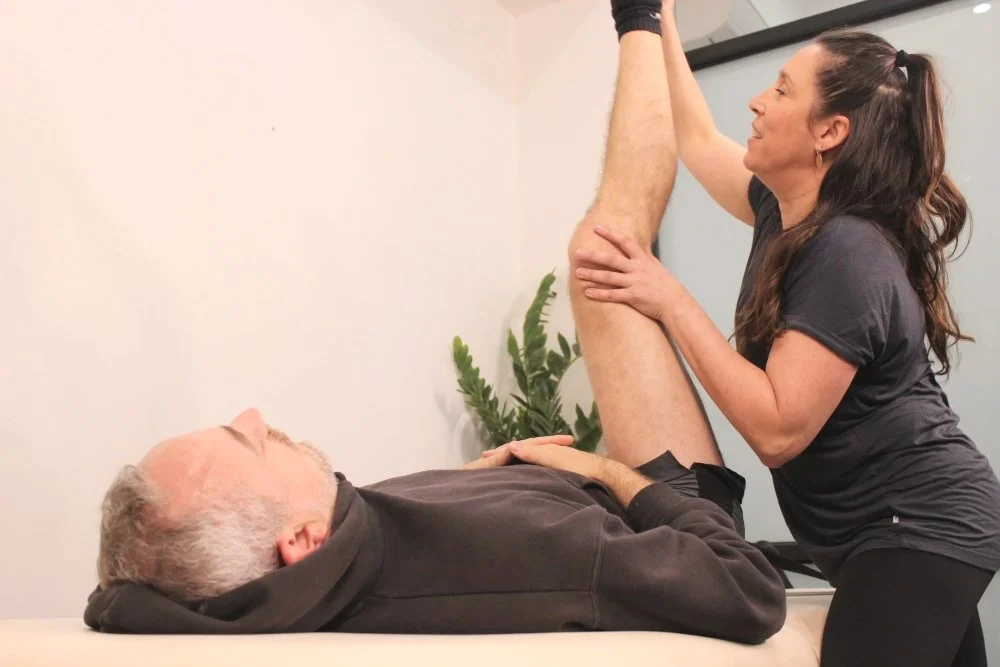
During an assisted stretching session, a trained stretch therapist guides your body through personalised stretches while you remain completely relaxed.
Because you aren't trying to hold positions yourself, your nervous system is often able to relax more fully. This can help reduce protective muscle tension and allow greater access to range of motion.
Many travellers choose assisted stretching after a long-haul flight because it helps:
Release tight hips from prolonged sitting
Improve mobility and flexibility
Reduce neck and shoulder tension
Ease lower back stiffness
Restore comfortable movement
Many clients describe feeling taller, lighter, and more mobile after a session.
Why Your Nervous System Matters
Most people think flexibility is simply about stretching muscles.
In reality, your nervous system plays a major role in determining how much movement your body allows.
After hours of sitting, your body can become protective and resistant to movement.
Assisted stretching helps create an environment where your muscles and nervous system can relax, making it easier to restore comfortable movement without forcing your body into uncomfortable positions.
How Long Does Post-Flight Stiffness Last?
For some people, stiffness improves within a few hours.
For others, particularly after long-haul travel, symptoms can linger for several days.
Factors such as age, fitness level, hydration, sleep quality, and pre-existing mobility restrictions all influence recovery time.
The more proactive you are about movement and recovery, the quicker your body is likely to bounce back.
The Bottom Line
Feeling stiff after a long flight is normal, but it doesn't have to ruin the first few days of your trip or your return home.
Walking, hydration, mobility exercises, and stretching can all help your body recover faster and restore comfortable movement.
If you're looking for a more targeted approach, assisted stretching offers a personalised way to release tension, improve mobility, and help your body feel its best after travel.
Whether you're returning to Melbourne from an overseas adventure or preparing for your next journey, investing in your mobility can make travel a lot more comfortable.
Related Posts