Stretching for Football Players: The Science-Backed Benefits for Performance, Recovery and Injury Prevention

With the FIFA World Cup currently capturing the attention of football fans worldwide, there's no better time to discuss one of the most underrated aspects of athletic performance: stretching.
While fans often focus on speed, technical ability and tactical awareness, elite footballers also invest heavily in flexibility and mobility training to keep their bodies performing at the highest level.
Whether you're a soccer player, AFL athlete, coach, or weekend competitor, stretching can play an important role in improving movement quality, enhancing recovery, and supporting performance throughout a demanding season.
In this article, we'll examine the latest research on stretching for football players and explain how flexibility training can benefit athletes both on and off the field.
Why Flexibility Matters in Football
Football is a physically demanding sport that requires players to repeatedly sprint, jump, kick, tackle, accelerate and change direction at high speeds.
These explosive movements place significant stress on key muscle groups including the:
Hamstrings
Hip flexors
Quadriceps
Calves
Adductors (groin muscles)
Glutes
If flexibility becomes restricted, movement efficiency can suffer. Reduced range of motion may also increase stress on surrounding muscles and joints during high-intensity activities.
This is particularly important given that hamstring injuries remain among the most common soft tissue injuries in football.
Stretching Can Improve Hamstring Flexibility
One of the strongest findings in sports science literature is the ability of stretching programs to improve hamstring flexibility.
A study involving 55 professional football players aged 18-20 compared three different stretching interventions:
Static stretching
Neuromobilisation
Mulligan Traction Straight Leg Raise (TSLR)
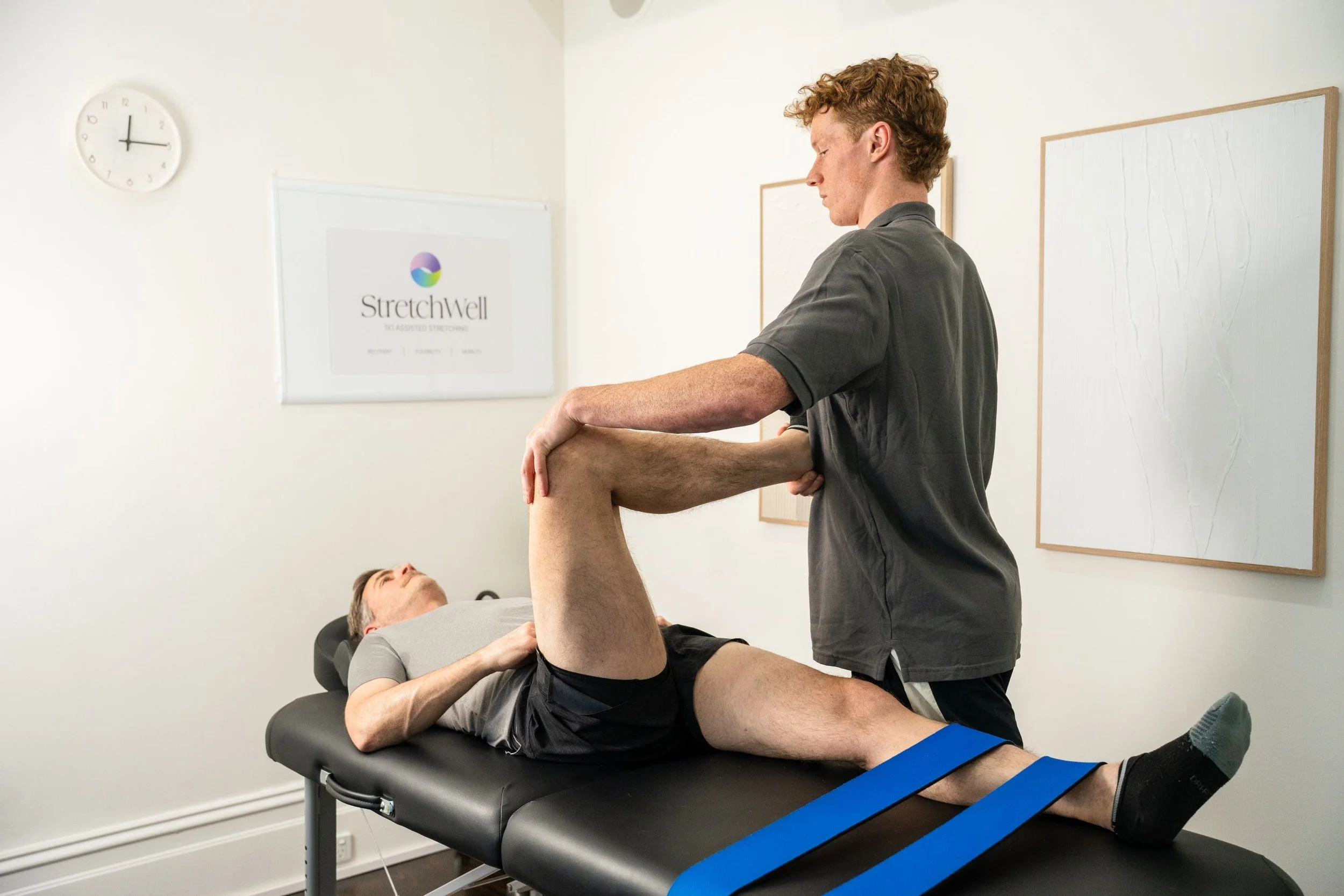
Researchers found that all three methods significantly improved hamstring flexibility. Interestingly, the Mulligan TSLR technique produced the greatest increase in range of motion compared to the other stretching approaches.
Hamstring Flexibility Exercises for Football Players
This finding is particularly relevant because limited hamstring flexibility has long been recognised as a common characteristic among athletes who experience hamstring strains.
Maintaining adequate flexibility allows footballers to move more freely during sprinting, kicking and directional changes while potentially reducing excessive tension through the posterior chain.
Improved Flexibility May Enhance Kicking Performance
Every footballer understands the importance of generating power through the ball.
Whether you're delivering a long pass, shooting from outside the box or launching a goal kick, lower limb mobility plays a critical role in effective kicking mechanics.
Research examining Australian Rules Football players found that a six-week hamstring stretching program significantly improved both hamstring flexibility and kicking distance.
Players participating in the stretching program improved their kicking distance by an average of 4.17 metres, while the non-stretching group experienced a slight decline.
How Hamstring Flexibility Improves Kicking Power
Although this research was conducted in AFL athletes, the findings are highly relevant for soccer players. Both sports rely heavily on explosive kicking actions that require adequate hamstring length and hip mobility.
For footballers looking to improve ball striking ability, flexibility training may offer benefits beyond simple injury prevention.
Dynamic Stretching Improves Football Performance
Not all stretching methods produce the same outcomes.
Recent research comparing static stretching, slow dynamic stretching and fast dynamic stretching following soccer-specific fatigue found important differences in performance recovery.
The study involved 40 male soccer players who completed a football-specific fatigue protocol before performing one of several stretching interventions.
The results showed:
Slow Dynamic Stretching Improved Athletic Performance
Slow dynamic stretching produced the greatest improvements in:
Sprint speed
Agility performance
Countermovement jump mechanics
Knee movement efficiency
Take-off performance
Researchers concluded that slow dynamic stretching was the most effective option when the goal was restoring athletic performance after fatigue.
Static Stretching Improved Range of Motion
While dynamic stretching excelled for performance measures, static stretching produced the greatest improvements in knee range of motion.
This suggests that different stretching methods serve different purposes.
For football players:
Dynamic stretching is ideal before training and matches.
Static stretching is better suited to recovery sessions and flexibility development.
Why Dynamic Warm-Ups Are Essential Before Football
Most elite football clubs now prioritise dynamic warm-ups over traditional static stretching immediately before competition.
A growing body of evidence suggests dynamic warm-ups can help prepare multiple body systems for performance, including:
Musculoskeletal readiness
Neurological activation
Cardiovascular preparation
Psychological readiness
Unlike static stretching, dynamic movements gradually increase body temperature while rehearsing sport-specific actions.
Examples include:
Leg swings
Walking lunges
High knees
Carioca drills
Lateral shuffles
Acceleration runs
Research indicates that dynamic warm-ups may improve athletic performance while also contributing to injury reduction strategies.
Sample Football Dynamic Warm-Up
Light jog (2 minutes)
Leg swings (10 each side)
Walking lunges (10 each leg)
High knees (20 metres)
Butt kicks (20 metres)
Lateral shuffles (20 metres)
Progressive accelerations (3 repetitions)
This type of routine prepares the body for the demands of football while maintaining explosive capabilities.
Stretching and Injury Prevention
One of the most common questions players ask is:
"Does stretching prevent injuries?"
The answer is that stretching alone is unlikely to eliminate injury risk.
However, flexibility training remains an important component of a comprehensive injury prevention strategy.
Effective injury reduction programs should also include:
Strength training
Sprint training
Load management
Recovery protocols
Neuromuscular conditioning
Mobility work
Stretching helps maintain adequate range of motion and may reduce movement restrictions that contribute to excessive tissue stress during football activities.
When combined with strength and conditioning, flexibility training becomes a valuable tool for long-term athletic development.
Benefits for AFL Players
Although this article focuses primarily on soccer, many of the same principles apply to Australian Rules Football.
AFL players perform:
Repeated high-speed running
Explosive acceleration
Long kicking actions
Frequent directional changes
The research on kicking distance demonstrates that hamstring flexibility may directly influence kicking effectiveness in AFL athletes.
For Melbourne footballers competing in local soccer or AFL competitions, regular flexibility training can support both performance and recovery throughout the season.
Best Stretching Routine for Football Players
For most athletes, a balanced approach works best.
Before Training or Matches
Focus on:
Dynamic stretching
Movement preparation drills
Football-specific warm-up exercises
After Training
Focus on:
Static stretching
Recovery mobility work
Foam rolling
Weekly Mobility Sessions
Dedicate one or two sessions per week to:
Hamstring flexibility
Calf flexibility
Groin mobility
Thoracic spine mobility
Consistency over time is what delivers meaningful improvements.
Final Thoughts
The world's best footballers don't leave performance to chance.
As the FIFA World Cup demonstrates, elite athletes continually seek marginal gains that can make the difference between winning and losing.
The evidence suggests stretching can:
Improve hamstring flexibility
Enhance kicking performance
Improve sprint and agility recovery
Increase range of motion
Support movement efficiency
Complement injury prevention programs
For football and AFL players alike, incorporating both dynamic and static stretching into a structured training routine can help maximise performance while supporting long-term athletic development.
Whether you're playing in Melbourne's local football leagues, competing at an elite level, or simply enjoying social sport, flexibility training deserves a place in your weekly program.
Related Posts