Hyrox Recovery: Why Stretching Matters for Race-Day Performance
Hyrox has become one of the fastest-growing fitness events in the world, and Melbourne is getting its next dose in a big way — Hyrox Melbourne returns to the Melbourne Convention and Exhibition Centre from 9 to 13 December 2026. If you're one of the growing number of Melburnians signed up, or training your way toward it, there's a part of preparation that gets far less attention than it should: recovery.
What Is Hyrox, and Why Is It Taking Over Melbourne's Fitness Scene?
Hyrox is a standardised indoor fitness race combining running with functional strength stations. Every event, everywhere in the world, follows the same fixed format: 8 x 1km runs, each followed by one of 8 functional workout stations, in the same order every time.
The 8 stations are: SkiErg, Sled Push, Sled Pull, Burpee Broad Jumps, Rowing, Farmers Carry, Sandbag Lunges, and Wall Balls — finishing on the wall balls, widely considered the most brutal way to end a race that's already put your whole body through the wringer.
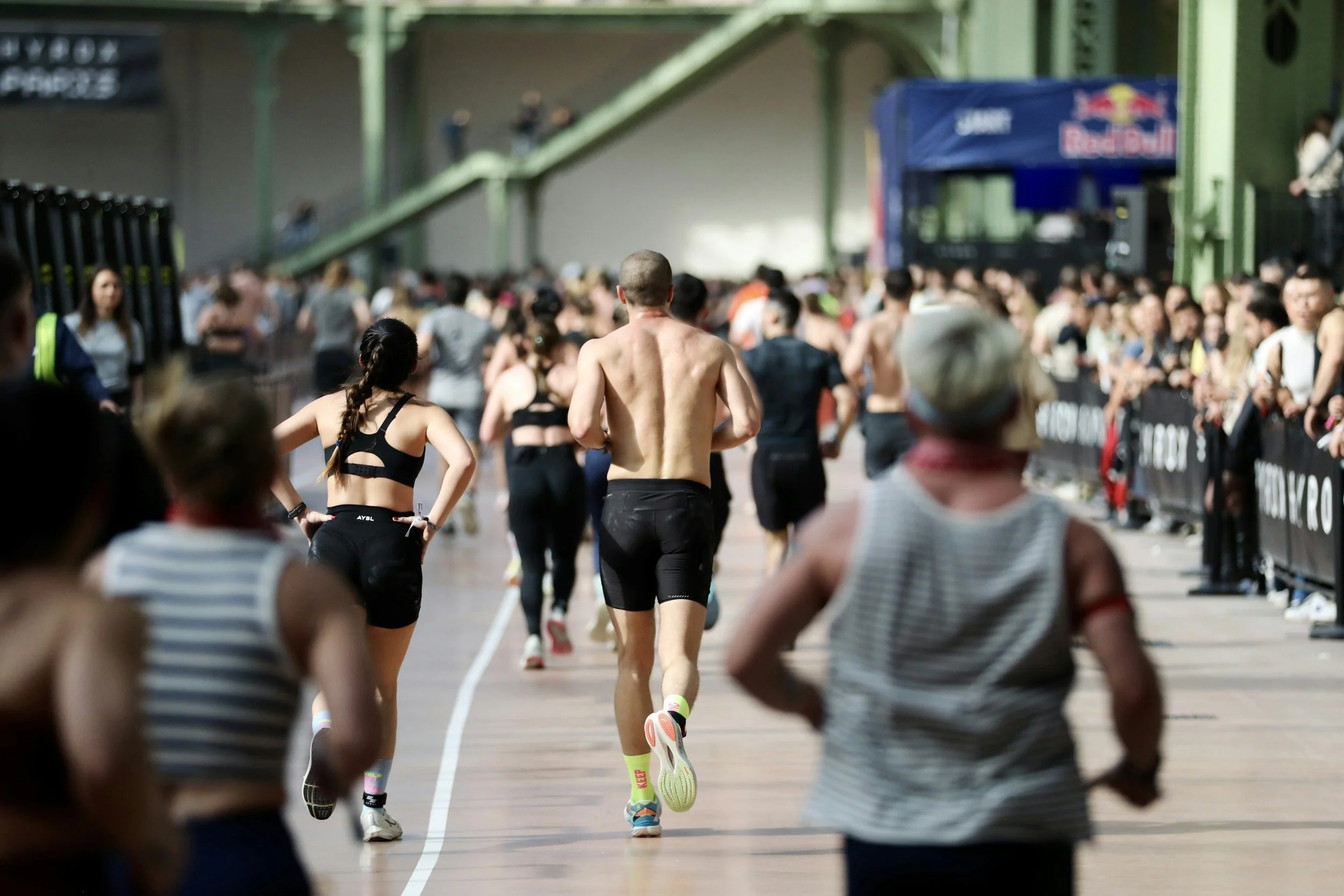
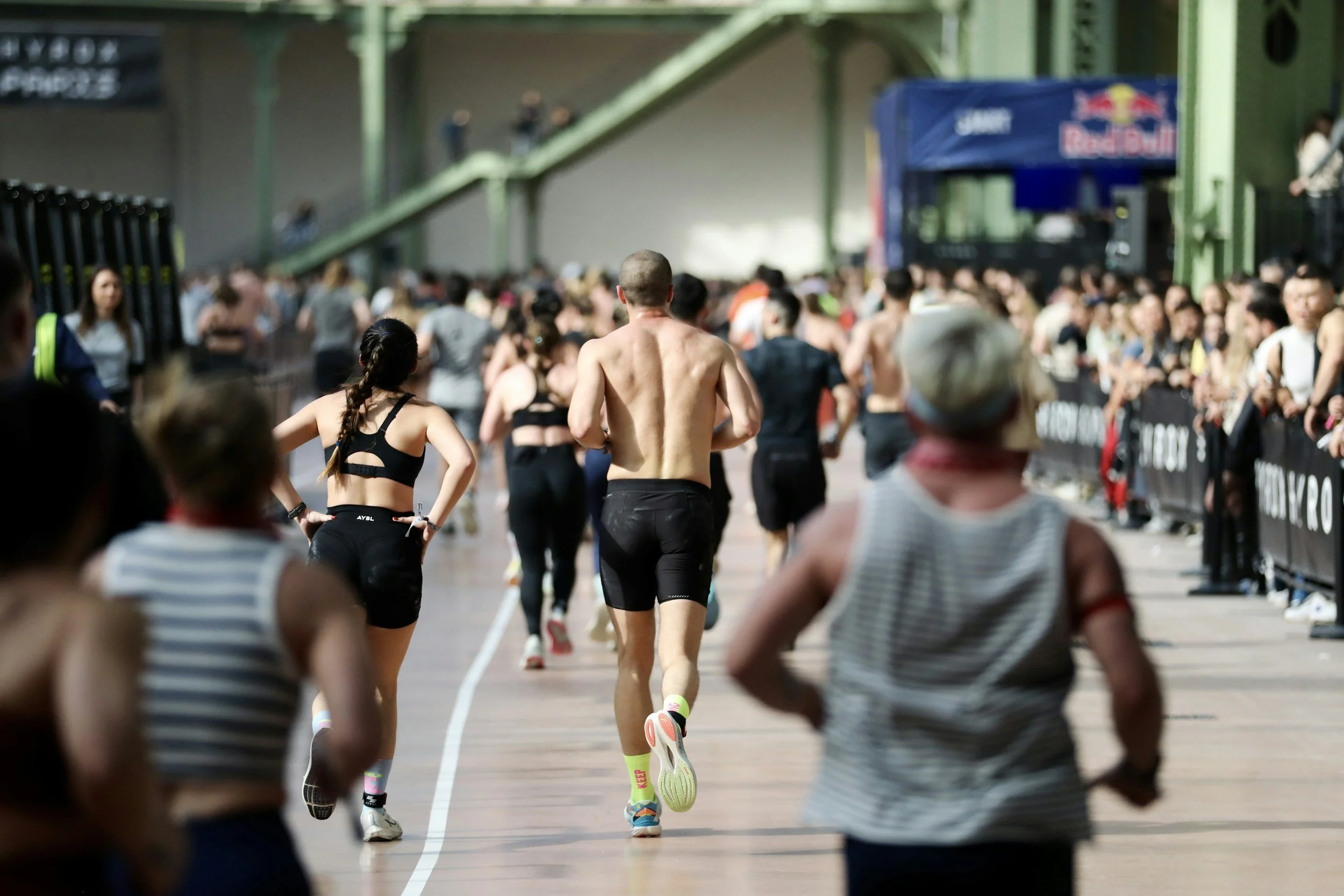
Part of what's driving Hyrox's popularity is exactly this standardisation — because the course never changes, athletes can train specifically for it and compare their times against a real global leaderboard, and because the movements aren't technically complex, it's accessible to first-timers and elite athletes alike. A typical race takes most competitors somewhere between 60 and 90 minutes of continuous effort.
The Part Most Training Plans Miss
Most Hyrox training advice out there — and there's a lot of it — focuses on the same handful of things: running intervals, sled work, strength conditioning, race-pace practice. All essential. What's noticeably absent from almost every training guide is a real plan for recovery and mobility, beyond a passing mention to "stretch after your session."
That's a gap worth taking seriously, because Hyrox asks more of your body in more directions at once than most training styles. You're combining distance running with heavy pushing, pulling, carrying and lunging, often within the same session — which means the muscle groups doing the work rarely get a chance to fully reset before the next demand comes along. Training blocks typically run 8-12 weeks, and without a deliberate recovery plan built in, tightness tends to accumulate rather than resolve, right up until race week.
What Tightens Up During Hyrox Training (Station by Station)
Different stations load different parts of the body — understanding this helps explain why a general "stretch a bit" approach often misses the areas that need it most.
Running (8km total) Repeated running under fatigue loads the calves, hamstrings and hip flexors heavily, especially as form starts to break down in the later kilometres.
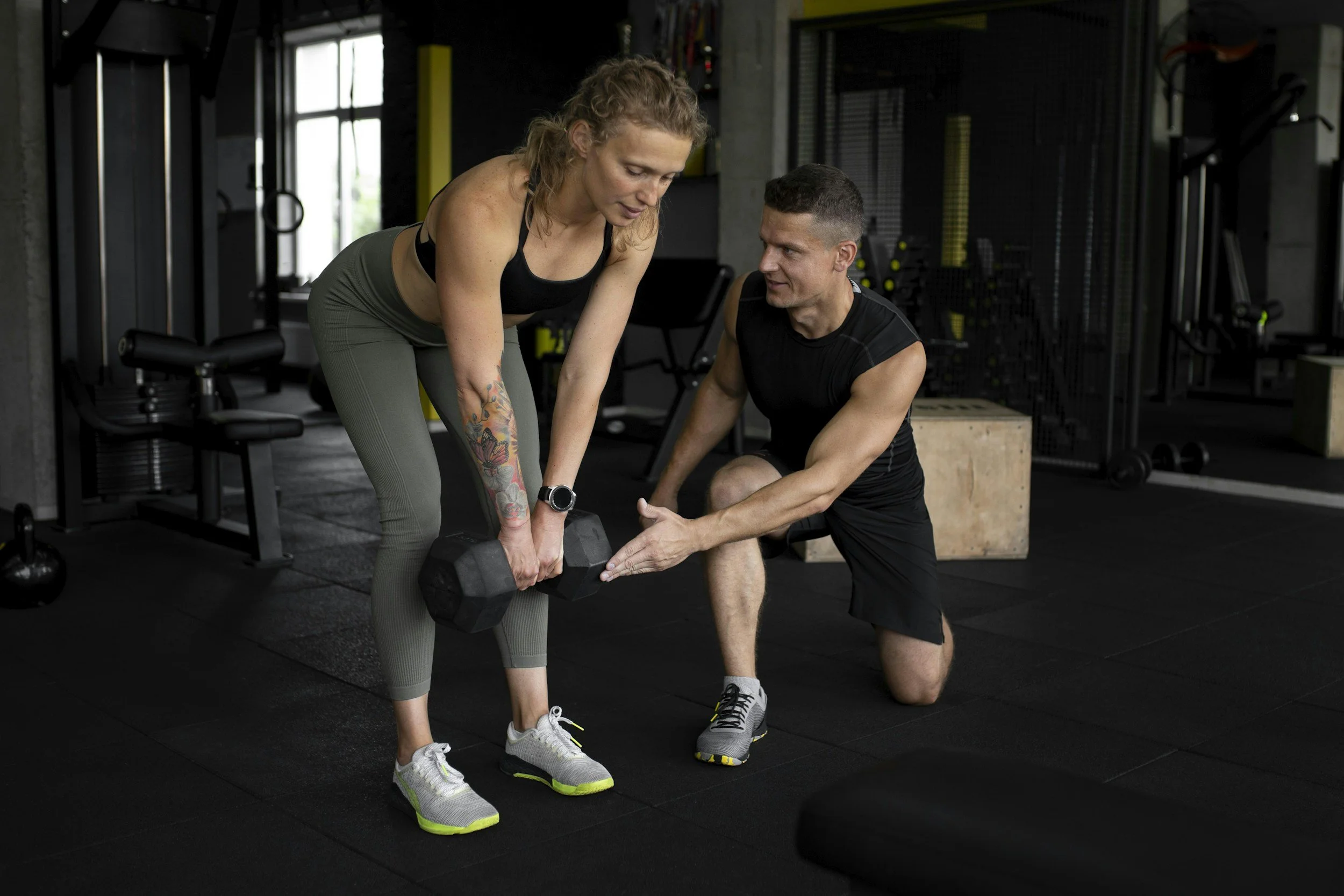
Sled Push and Sled Pull Both place significant demand on the quads, hip flexors and lower back, particularly sled push, where a forward-leaning position under load is a common contributor to hip and lower back tightness.
Burpee Broad Jumps A demanding combination of shoulders, hips and ankles, with the repeated impact adding up across the station.
Rowing Loads the lower back, hamstrings and lats simultaneously, and poor rowing technique under fatigue is a common contributor to lower back tightness specifically.
Farmers Carry Tests grip strength but also loads the traps, shoulders and core heavily under sustained tension.
Sandbag Lunges Directly loads the hip flexors, quads and glutes, and is frequently where athletes report their legs "give out" first, given the compounded fatigue by this point in the race.
Wall Balls The final station, and arguably the most demanding — shoulders, quads and lower back all under load, right when fatigue is at its highest.
Put together, it's clear Hyrox doesn't spare any one part of the body — which is exactly why a recovery approach needs to address the whole system, not just whichever area feels tightest that week.
Why Assisted Stretching Fits Hyrox Training Specifically
Most Hyrox-focused gyms are, understandably, built around strength and conditioning — that's what gets you race-ready. Flexibility and mobility work tends to get squeezed into a five-minute warm-up or skipped altogether when time is tight, which is completely reasonable given what a training session needs to prioritise. But it does leave a gap that builds up over a training block.
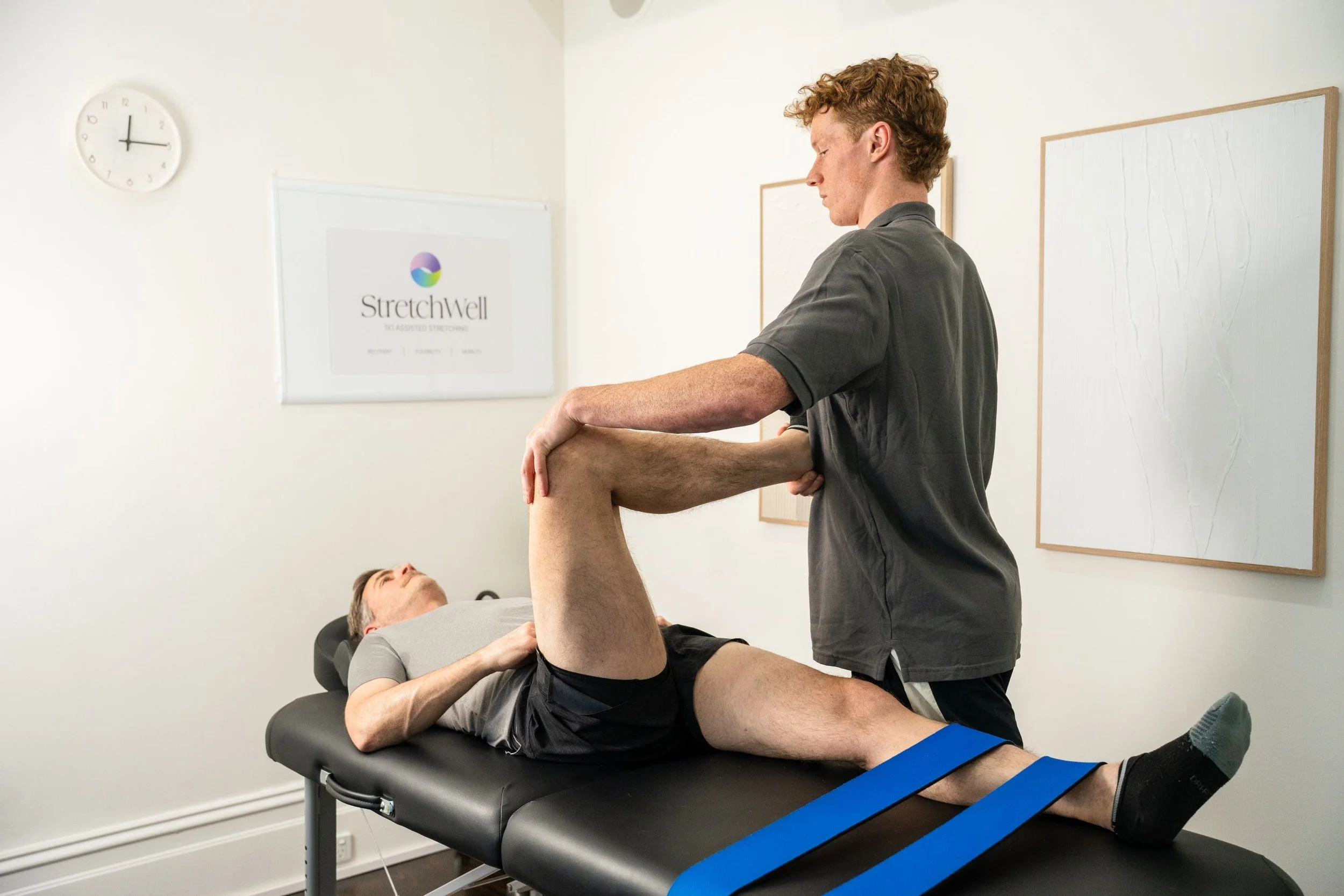
This is where assisted stretching complements Hyrox training rather than competing with it. Rather than a quick self-stretch at the end of a session, a therapist-guided session works through the specific areas under load — hip flexors and lower back from sled work, hamstrings and calves from running, shoulders from wall balls and farmers carries — allowing your body to properly relax into a deeper release than most people manage after an already-exhausting session.
At StretchWell, this often includes Proprioceptive Neuromuscular Facilitation (PNF) techniques, which work well alongside strength-focused training since they help maintain range of motion without interfering with the strength adaptations you're working hard for in the gym.
Before Training Blocks, During, and Race Week
Early in your training block: a session or two can help identify existing tightness before it becomes a limiting factor once volume ramps up — particularly useful if you already know your hips or lower back tend to tighten under load.
Mid-block, during heavier training weeks: regular sessions help manage the accumulated tightness across running, sled work and carries before it starts affecting your form or increasing injury risk.
Race week: a session in the days before competing can help you start the race with a looser, more prepared body, rather than carrying weeks of accumulated tightness into the start line.
After the race: a post-event session addresses the full-body fatigue and tightness that comes from 60-90 minutes of continuous, varied effort — arguably when your body needs it most, and often when people are least likely to prioritise it.
Where Melbourne's Inner North Is Training for Hyrox
If you're building toward Hyrox Melbourne this December, a few local gyms are already leaning into dedicated training for it:
FitStop Northcote (470 High Street, Northcote) has been actively promoting Hyrox-specific training in the lead-up to Melbourne's event, just a few doors down from StretchWell on the same High Street strip.
CrossFit North Carlton (3 Kirkdale St, Brunswick East) runs dedicated training tracks for members preparing for Hyrox alongside their core CrossFit programming.
If you're training with either of these (or anywhere else building toward December), pairing that training with regular assisted stretching at StretchWell is a straightforward way to manage the recovery side most Hyrox programming doesn't fully cover.
Getting Ready for Hyrox Melbourne 2026
Whether you're chasing a personal best, tackling your first Hyrox, or lining up for the Doubles or Relay division, the training is only half the picture. Recovery — properly built into your plan, not squeezed in as an afterthought — is what lets you keep training consistently through a demanding block and arrive at the start line in your best shape.
Book an assisted stretching session at StretchWell in Northcote and make recovery part of your Hyrox preparation, not an afterthought.
FAQs
Does stretching help with Hyrox training? Yes — assisted stretching helps manage the tightness that builds up across running, sled work, carries and lunges during a Hyrox training block, supporting better range of motion and reducing the load on already-fatigued muscle groups.
When should I book a stretching session before a Hyrox race? A session in the few days before race day can help you start the race with a looser, more prepared body. Sessions during your training block also help manage accumulated tightness before it becomes a limiting factor.
What muscles get the tightest from Hyrox training? Hip flexors, hamstrings, calves, lower back and shoulders are the most commonly affected, largely from the combination of sled work, running and carries under fatigue.
Is assisted stretching a substitute for Hyrox-specific training? No — it's a complement. Training gyms like FitStop Northcote and CrossFit North Carlton handle the strength and conditioning side; assisted stretching addresses the recovery and mobility side most training programs don't fully cover.
How often should Hyrox athletes book assisted stretching during a training block? This depends on training volume, but many athletes find weekly or fortnightly sessions helpful during heavier blocks, with an additional session in race week.
Related Posts