Running the Melbourne Marathon? How stretching can improve performance and recovery
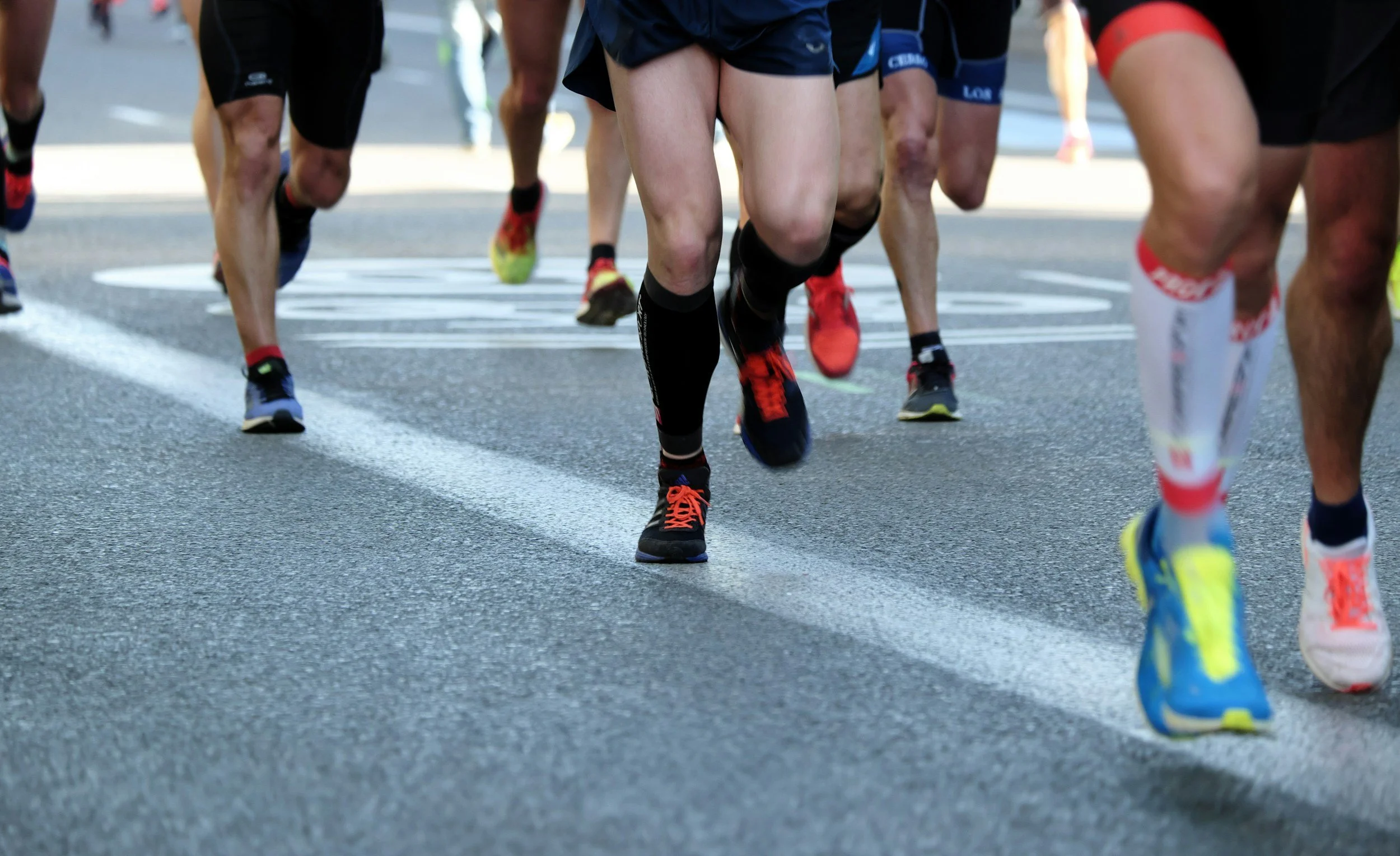
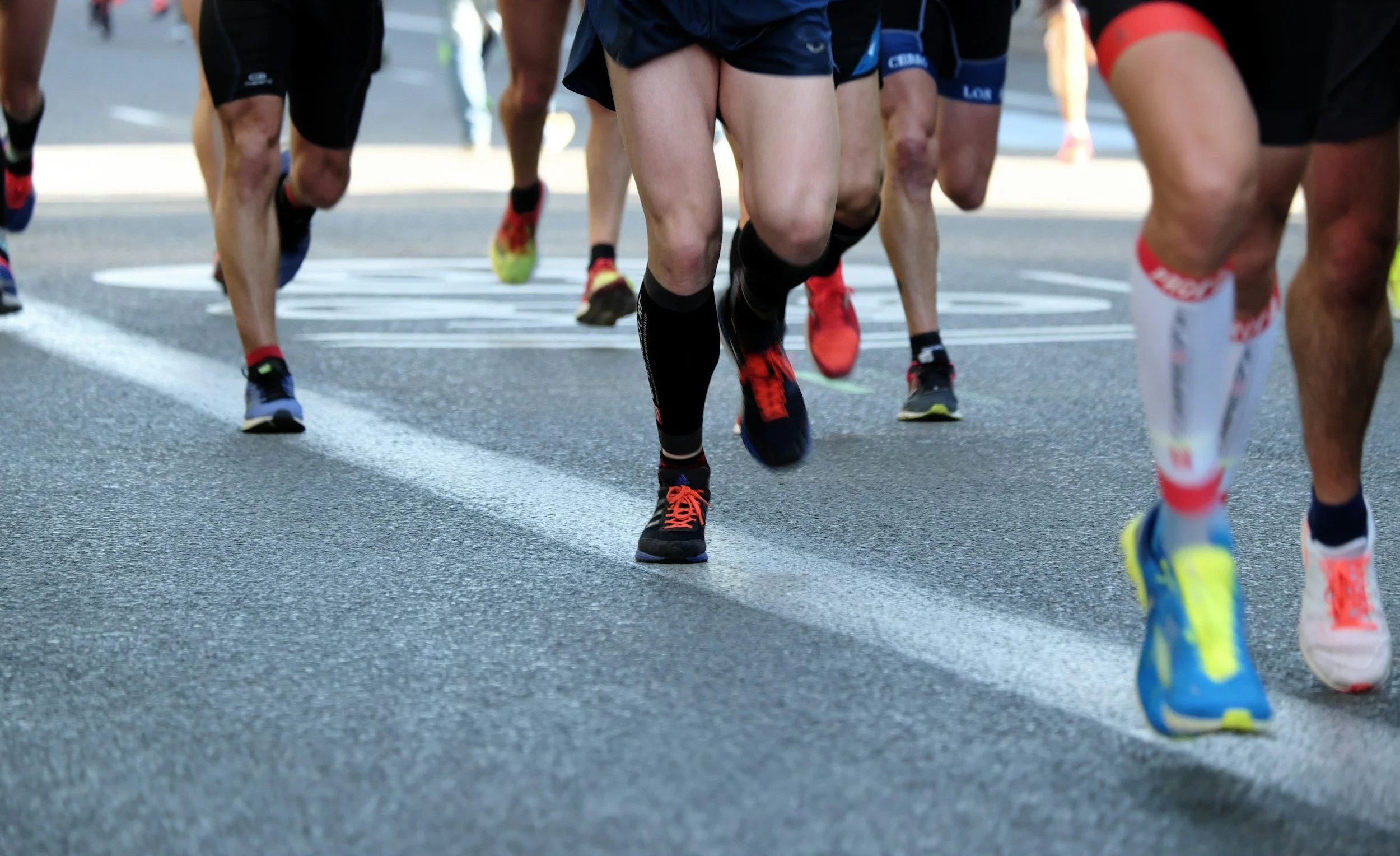
The 2026 Melbourne Marathon Festival is on Saturday 10th & Sunday 11th October, with the course starting on Batman Avenue and finishing with a lap of the MCG (Running Calendar Australia). If you're lining up for the 42.2km (or the half!), you've probably spent months building your long runs, dialling in your fuelling and negotiating with your hamstrings.
By now, most runners know the training plan inside out. What often gets left until the last minute is mobility. Tight hips, stiff calves and grumpy hamstrings are part and parcel of marathon training, and they can quietly change the way you run.
In this post we'll cover how assisted stretching fits into a marathon block, what the research actually says about stretching and stride length, what to do in race week, and how to look after your body once you've crossed the line at the G.
What is assisted stretching?
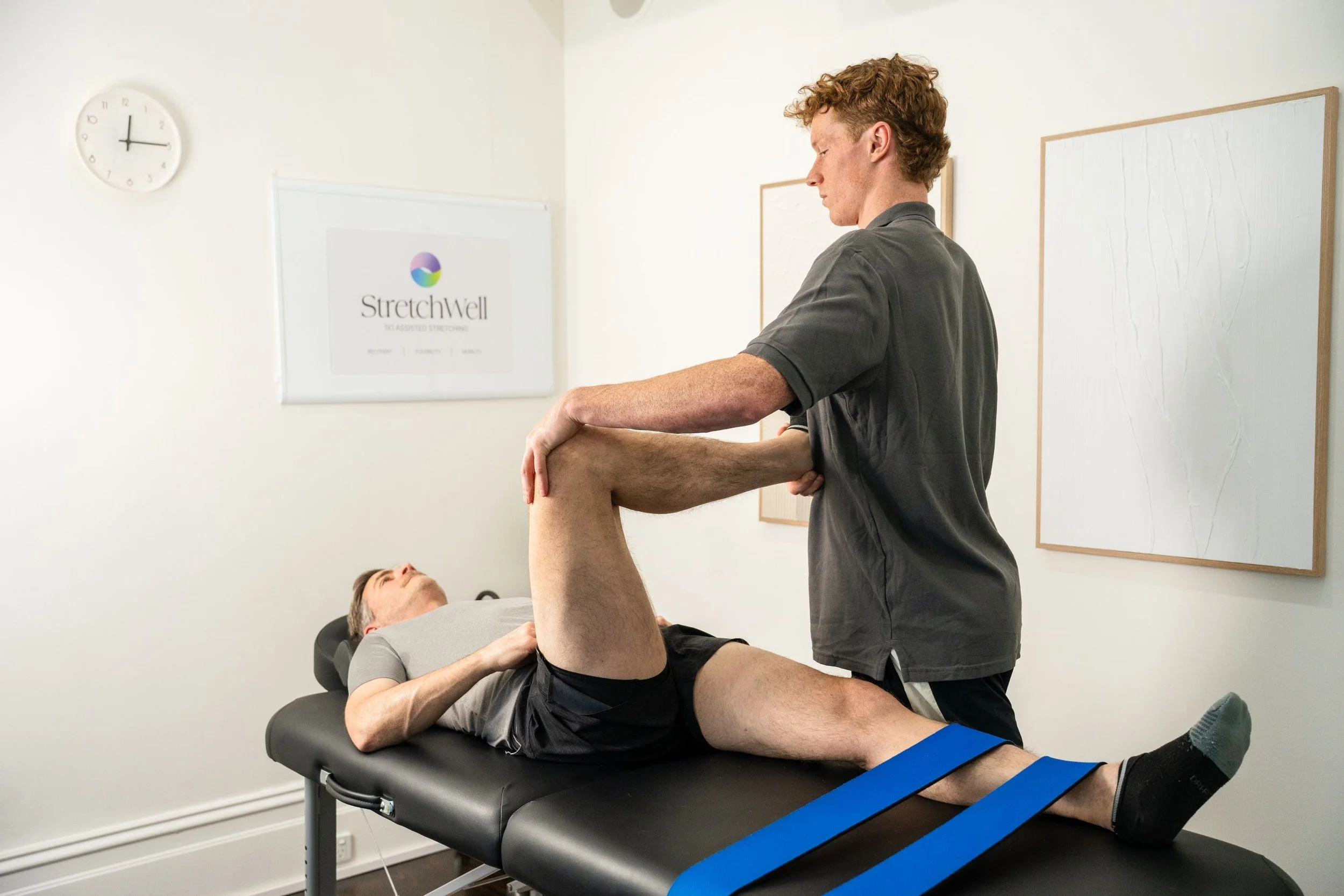
Assisted stretching is a one-on-one session where a trained stretch therapist moves your body through stretches while you relax. Because someone else is doing the work, your muscles can let go more than they would when you're holding a stretch yourself (and wobbling on one leg in the kitchen).
A big part of most sessions is PNF stretching, short for proprioceptive neuromuscular facilitation. You gently push against your therapist's resistance for a few seconds, relax, and then move a little further into the stretch. It's hard to do properly on your own, which is a big reason why it suits a hands-on session so well.
For runners, sessions usually focus on the areas that take the most load: hamstrings, hip flexors, glutes, calves, quads and lower back. If you're new to it, our post on what assisted stretching is goes into more detail.
What does the science say about stretching and stride length?
One of the most interesting studies on this comes from footballers. In a 2009 study published in the Journal of Strength and Conditioning Research, 18 rugby league players stretched their hamstrings four days a week for five weeks, using either static stretching or PNF stretching (Caplan et al., 2009).
The researchers filmed the players running at 80% of their top speed before and after the program. Here's what changed:
Hip flexion improved by 4.9% in the static stretching group and 7.6% in the PNF group
Stride length increased by 7.1% with static stretching and 9.1% with PNF
Stride rate dropped slightly (1.9% and 4.3%), so the players were taking longer but slightly fewer steps which makes sense.
In other words, more range at the hip let the players open up their stride. And the PNF group, the style of stretching used for assisted sessions, saw the biggest gains. The researchers concluded that stretching at the end of regular training was an effective way to change running mechanics.
So will stretching make my marathon faster?
It's a fair question, and we want to give you a straight answer. The study measured stride, not race times, and it looked at fast running rather than marathon pace. Longer strides can help, but only if you keep your cadence up and the extra reach doesn't cost you energy.
Research on distance runners is more mixed. A study of international-level runners found the less flexible athletes were actually slightly more economical, possibly because a bit of muscle stiffness helps you store and return energy with each step (Jones, 2002, summarised here). Another study found static stretching before a run didn't change running economy or endurance performance in trained female distance runners (Mojock et al., 2011).
Our take? The goal isn't to become as bendy as possible. It's to make sure tight hamstrings, hip flexors and calves aren't limiting how freely you move. If tightness is shortening your stride or pulling your form out of shape late in a long run, restoring that range can help you run more comfortably and efficiently, which is where better times tend to come from.
During your training block
The footballers in that study stretched regularly over five weeks, and their gains came from consistency rather than one big session. Marathon training works the same way. Weekly kilometres climb, long runs get longer, and the same muscles get loaded over and over again.
That repetitive load is where tightness creeps in. Common ones we see in runners include:
Hamstrings that feel short and pull at the back of the knee or sit bones. Our tight hamstrings page explains why this happens.
Hip flexors that shorten your stride, especially if you sit at a desk between runs
Calves and Achilles that take a pounding on Melbourne's footpaths and bitumen
Quads and ITB area that leave knees feeling cranky on the stairs. See our page on knee pain and mobility.
Glutes and lower back that tighten up and sometimes send pain down the leg. If that sounds familiar, have a read of our sciatica relief page.
A regular assisted stretch session during your build gives you a chance to work through these areas properly, notice which side is tighter, and get on top of niggles before they turn into something bigger. Most runners find a 50-minute Full Body Stretch every one to two weeks fits well alongside their long-run day.
If something is sharp, swollen or getting worse, see a physio or sports doctor first. Stretching is great for tightness, but it's not a substitute for having an injury assessed.
Race week: getting to the start line feeling loose
The golden rule of race week is nothing new. If you've never had an assisted stretch before, the days before a marathon aren't the time for a deep first session. If you've been stretching through your build, a lighter session in race week can help you feel loose and settled.
Here's how we'd time it:
4 to 5 days out (the Wednesday before a Sunday race): this is the sweet spot for a relaxed Full Body Stretch. Your therapist will keep the pressure moderate and focus on easing tension rather than chasing big range.
2 days out (Friday): keep it short and gentle if you book at all. A 25-minute Targeted Stretch on your legs and hips is plenty.
The day before: skip the stretch session. Put your feet up, sort your race kit and get to bed early.
Race morning: stick to an easy jog and dynamic movements like leg swings and walking lunges. Save long static holds for after the run, as they're better suited to your cool-down (myDr).
If you're running another marathon next year, book race-week sessions early. Spots before big events fill quickly!
After the marathon: helping your body bounce back
Congratulations, you've run 42.2km! Now comes the part most runners underestimate. A marathon leaves your muscles with lots of tiny bits of damage, and the soreness often peaks a day or two after the race (hello, walking down stairs backwards).
Deep stretching straight away isn't the answer. Your muscles need a few days to settle before they're ready to be worked on. Here's what we suggest:
Race day and the next 2 days: walk, hydrate, eat well and sleep. Gentle movement helps, but leave intense stretching alone.
3 to 5 days after (the Wednesday or Friday after a Sunday race): this is a great time for a gentle assisted session. We'll keep things light and focus on easing stiffness through your calves, hamstrings, hips and lower back.
1 to 2 weeks after: once the soreness has eased, a full session helps restore your range before you start building your running back up.
Post-race is also a nice time to look back at your build. Which areas kept tightening up? Was one side always worse? Those answers make a great starting point for your next training block. Our sports recovery page covers how we work with runners and athletes, and our guide to the best recovery spots for runners in Melbourne's inner north has a few more ideas.
Your marathon stretching timeline at a glance
| When | What to do | StretchWell session |
|---|---|---|
| Throughout your training block | Regular sessions to keep hamstrings, hips and calves moving freely | Full Body Stretch (50 min) every 1 to 2 weeks |
| 4 to 5 days before the race | One relaxed session to ease tension | Full Body Stretch (50 min), moderate pressure |
| 2 days before the race | Optional, short and gentle | Targeted Stretch (25 min), lower body |
| Race morning | Easy jog and dynamic warm-up, no long static holds | None |
| 0 to 2 days after | Walk, rest, refuel | None |
| 3 to 5 days after | Gentle session to ease stiffness | Full Body Stretch (50 min), light pressure |
| 1 to 2 weeks after | Restore range before building back up | Full Body Stretch or Ultimate Full Body Stretch (80 min, includes Theragun) |
Book your pre- or post-marathon stretch in Northcote
Whether you're squeezing in a race-week session or planning your recovery, we'd love to help you look after the body that's carrying you 42.2km. StretchWell is on High Street in Northcote, an easy trip from Brunswick, Fitzroy, Thornbury and the rest of the inner north.
We're open Wednesdays and Fridays, 9am to 7pm, and sessions start from 25 minutes. Training for a spring marathon again next year? Our StretchClub memberships make regular sessions through your whole build simple.
Resources and further reading
Caplan, N., Rogers, R., Parr, M. & Hayes, P. (2009). The effect of proprioceptive neuromuscular facilitation and static stretch training on running mechanics. Journal of Strength and Conditioning Research, 23(4), 1175–1180.
Mojock, C. D. et al. (2011). The effects of static stretching on running economy and endurance performance in female distance runners during treadmill running. Journal of Strength and Conditioning Research, 25(8), 2170–2176. Via PEDro, the Physiotherapy Evidence Database.
Jones, A. M. (2002). Running economy is negatively related to sit-and-reach test performance in international-standard distance runners. International Journal of Sports Medicine, 23, 40–43.
Running Calendar Australia: Melbourne Marathon Festival event details
Related Posts