Stretches for Cyclists: Ease Tight Hips, Lower Back and Neck After the Ride
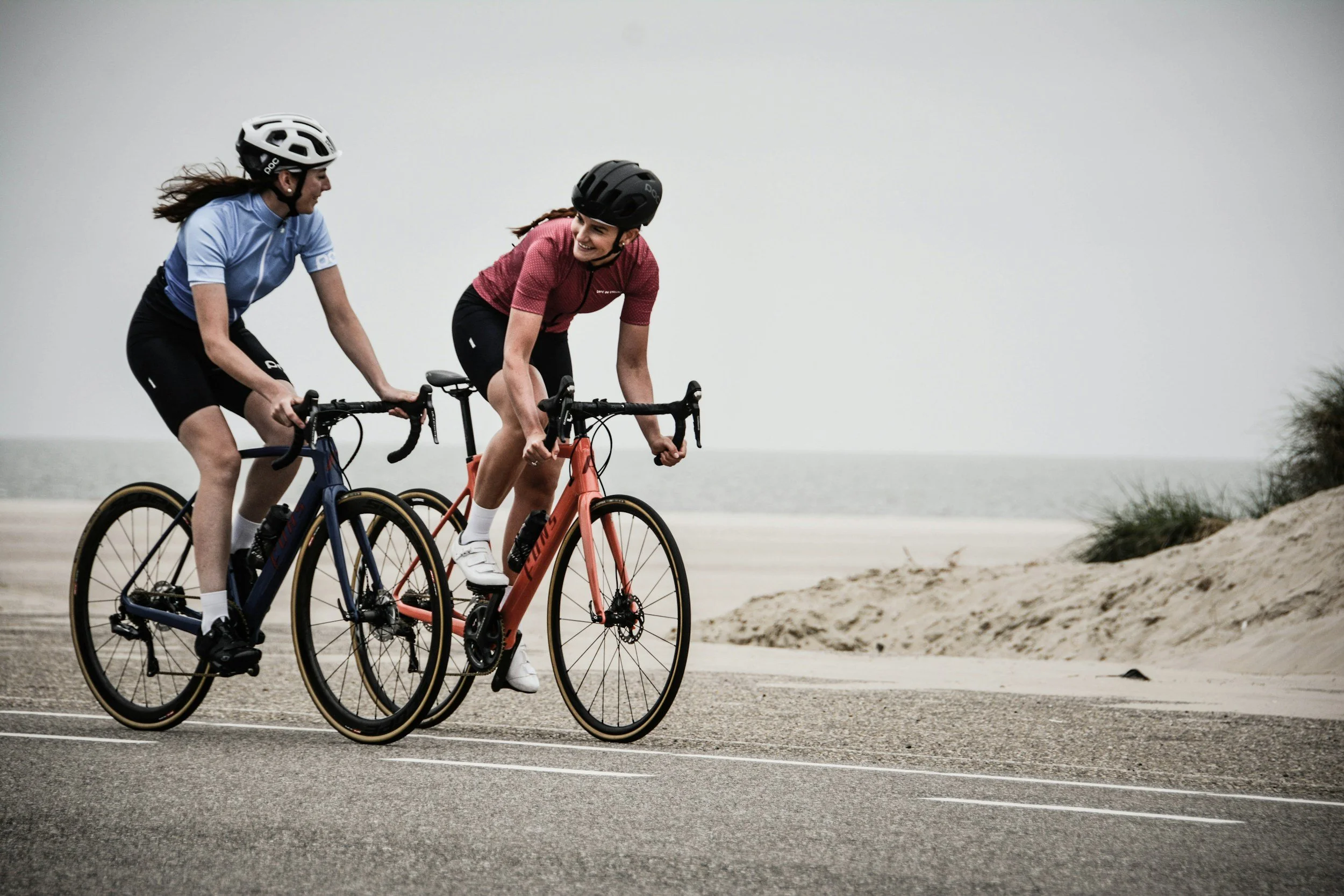
If your hips feel locked up after a long ride, your lower back grumbles by the end of a weekend loop and your neck is the first thing to complain on the hoods, you're in very good company. Cycling is kind to your joints and hard on your posture. You hold roughly the same folded-over position for an hour or three, and the same muscles shorten and tire in the same way with every pedal stroke.
TL;DR: after a ride, spend 8 to 10 minutes stretching your hip flexors, quads, hamstrings, glutes, lower back, chest and neck, holding each one for around 30 seconds. Before a ride, skip the long static holds and do a few minutes of easy dynamic movement instead. Below you'll find every stretch explained step by step, when to do them, what's behind lower back and neck pain on the bike, and when it makes sense to get a second pair of hands involved.
Why cycling leaves you so tight
On paper, cycling is low impact. In practice you spend hours in one fixed shape, repeating the same movement thousands of times, and the muscles involved rarely get a chance to lengthen again. Here's roughly what that looks like from the saddle:
Hips: your hip flexors stay folded and shortened for the entire ride. Stand up afterwards and they can feel like they've set that way, which is why plenty of riders shuffle off the bike a little hunched.
Thighs and glutes: quads and glutes do most of the pushing, and your hamstrings work at both ends of the pedal stroke. Repetition tightens all of them.
Lower back: the lumbar spine sits in a long, sustained forward bend, more so in a lower road position.
Chest, shoulders and neck: your hands carry some of your weight, your shoulders creep up and forward, and your neck has to extend so you can see where you're going.
Calves: a fixed foot position and lots of ankle work can leave them stiff, especially after hilly rides.
One physiotherapist's overview of cycling injuries points to the neck and back as the main sources of overuse problems in riders, which matches what most of us notice after a long day out.
None of this means cycling is bad for you. It's one of the best things you can do for your heart and legs. It just means your body benefits from a few deliberate minutes in the opposite shape once you're off the bike. If you only have time for one area, start with your hips.
Should you stretch before or after a ride?
Both, but they're different jobs.
Before you ride, warm up with five minutes of easy spinning, then add a few dynamic moves that take your joints through their range without holding anywhere:
Leg swings, front to back: 10 each leg
Hip circles: 8 each direction
Cat-cow: 8 slow reps
Open-book rotations (lying on your side, opening your top arm like a book): 8 each side
Save the long static holds for later. Australian health site MyDr explains that stretching before exercise improves flexibility, but its effect on preventing injury is still unclear, so it suggests keeping most of your static stretching for the cool-down.
After you ride, while your muscles are still warm, spend 8 to 10 minutes on the stretches below. If you roll in and head straight for coffee, that's fine. A warm shower and a stretch later that evening works just as well.
One honest caveat: stretching won't guarantee you never feel sore, and the evidence on stretching as injury prevention is mixed. What it does reliably do is maintain and improve your range of motion over time, and plenty of riders find it takes the edge off that stiff, tight feeling after a long day in the saddle.
8 stretches for cyclists (post-ride routine)
Hold each stretch for 20 to 30 seconds, do both sides, and breathe normally. You want a firm, comfortable pull, never pain. Don't bounce.
1. Half-kneeling hip flexor stretch
Where you'll feel it: the front of the hip on the kneeling side.
Kneel on one knee (a folded towel under it helps) with the other foot flat in front. Squeeze the glute of the back leg and tuck your tailbone under, then shift your weight forward a few centimetres. The most common mistake is arching the lower back, so keep your ribs down. To go further, reach the arm on the kneeling side overhead.
2. Standing quad stretch
Where you'll feel it: the front of the thigh.
Hold a wall or bike for balance, bend one knee and hold your ankle behind you. Keep your knees together and your tailbone tucked, rather than leaning forward from the waist.
3. Lying hamstring stretch
Where you'll feel it: the back of the thigh.
Lie on your back, loop a strap or towel around one foot and lift that leg towards the ceiling, keeping the other leg flat. Ease the leg towards you until you feel a pull, with the knee soft rather than locked. Lying down takes your lower back out of the equation, which is a big plus after a ride. If your hamstrings are especially stubborn, our guide to tight hamstrings goes into more detail.
4. Figure-four glute stretch
Where you'll feel it: deep in the buttock and outer hip.
Lie on your back with knees bent, cross one ankle over the opposite knee, then draw the bottom thigh towards your chest. Keep your head resting on the floor.
5. Child's pose with a side reach
Where you'll feel it: lower back and the sides of your ribs.
Kneel, sit back towards your heels and reach your arms forward along the floor. Rest here for a few breaths, then walk both hands to the right for 20 seconds, then to the left. It's a gentle way to undo the rounded-forward shape of the ride.
6. Doorway chest stretch
Where you'll feel it: across the chest and the front of the shoulder.
Place your forearm on a door frame with your elbow at about shoulder height, then step through slowly until you feel the stretch. Hours with your hands on the bars tend to pull the chest and shoulders forward, and this opens them back up.
7. Upper trapezius neck stretch
Where you'll feel it: the side of the neck, running down towards the shoulder.
Sit tall and hold the edge of your seat with one hand to keep that shoulder down. Tilt your opposite ear towards your other shoulder and stop at a gentle stretch. Don't pull on your head with your hand.
8. Wall calf stretch
Where you'll feel it: the back of the lower leg.
Stand facing a wall with one foot back, heel down and leg straight, and lean in. Then bend the back knee slightly to shift the stretch lower down into the soleus and Achilles. Riders who get recurring calf or Achilles grumbles may also want to read about ankle and calf tightness.
Lower back pain from cycling: what actually helps
Lower back pain is one of the most common complaints on the bike, and it rarely has a single cause. The usual suspects are:
Time in sustained spinal flexion. Hours of forward bend, especially in a low, stretched-out road position, load the lower back in the same way over and over.
Bike set-up. A saddle that's too far forward or back, bars that sit too low or too far away, or a frame that's simply the wrong size can all push your back into a position it struggles to hold.
Tight hips and hamstrings. When these are short, they can tug on the pelvis and make it harder to hinge forward from the hips instead of rounding through the spine.
A tired core and glutes. Cycling does very little to train your back and trunk, so they can fade late in a long ride.
A fast jump in volume. Riding a lot more than you're used to, or switching to a lower, more aggressive position, is a common trigger for back and neck pain.
So what helps? Work through these in roughly this order:
Check your fit. If pain keeps coming back, a professional bike fit is usually money well spent. Even small changes to saddle height or reach can make a difference.
Change position often. Move your hands, sit up on the flats, stand on the pedals now and then.
Stretch the hips, hamstrings and glutes using the routine above, especially after long rides.
Add some strength work twice a week: glute bridges, planks, side planks and deadlifts or hip hinges all help your trunk and hips carry you through a long day.
Build load gradually. Increase distance and intensity in small steps rather than big jumps.
Stretching is one piece of this, not the whole answer. If your pain is persistent, we have a full page on lower back pain with more on what a session can and can't do.
When to get checked first: see your GP or a physio if the pain travels down your leg, if you notice numbness, tingling or weakness, if it wakes you at night, or if it started after a fall or crash. Pain that runs through the buttock and down the leg can also be sciatica, which is worth having properly assessed.
Neck and shoulder pain from cycling
Picture a typical rider from the side: head pushed forward, chin lifted so the eyes can see the road, shoulders hunched towards the ears. Ride On, the magazine of Melbourne-based Bicycle Network, describes exactly that posture and suggests working neck and shoulder stretches into your routine, either after rides or even during them.
That sustained position is why the back of the neck, the top of the shoulders and the upper back tend to complain first. A few things make a real difference:
Move on the bike. Roll your shoulders, gently tilt your head side to side and look down and up every so often, and sit upright from time to time.
Soften your arms. Locked elbows and a death grip on the bars send the load straight into your neck and shoulders. Keep a gentle bend and relax your hands.
Vary your hand position on long rides, and check that your reach isn't too stretched out.
Open up the chest and upper back. The doorway chest stretch and the neck stretch above are a good start. Chin tucks (gently drawing your chin straight back, as if making a double chin) retrain the deep neck muscles and take a minute at most.
Strengthen your mid-back. Rows with a band or dumbbells help your shoulder blades sit where they should.
If neck or shoulder tension is your main problem, our pages on neck pain and shoulder pain explain how we approach it, and posture correction covers the bigger picture. Pins and needles or numbness in your hands, or pain that spreads down an arm, is worth getting looked at by your GP or physio.
How often and how long should cyclists stretch?
A realistic target is the routine above after every longer ride, plus a shorter version on rest days. Bicycle Network's Ride On suggests its neck and upper back stretches each day, or at least three times a week, and that's a sensible benchmark for the whole routine too.
Some simple rules keep it effective:
Hold for 20 to 30 seconds, and a bit longer (up to a minute) on a spot that feels especially stuck.
Do one to three rounds per stretch if you have time.
Aim for a firm pull, not pain. Sharp, pinching or nervy sensations mean back off.
Breathe slowly and try to relax into it. Holding your breath tenses the muscles you're trying to release.
Be consistent. Ten minutes three or four times a week beats one 40-minute session when you finally can't stand your hips any more.
On heavy training weeks, or the day after a long event, the same stretches done gently in the evening are a good way to wind down.
When stretching on your own isn't enough
Self-stretching works well for most riders, but it has limits. It's hard to fully relax while you're also holding yourself in position, and some areas, like the deep hip flexors and glutes, are tricky to isolate without your lower back stepping in to compensate.
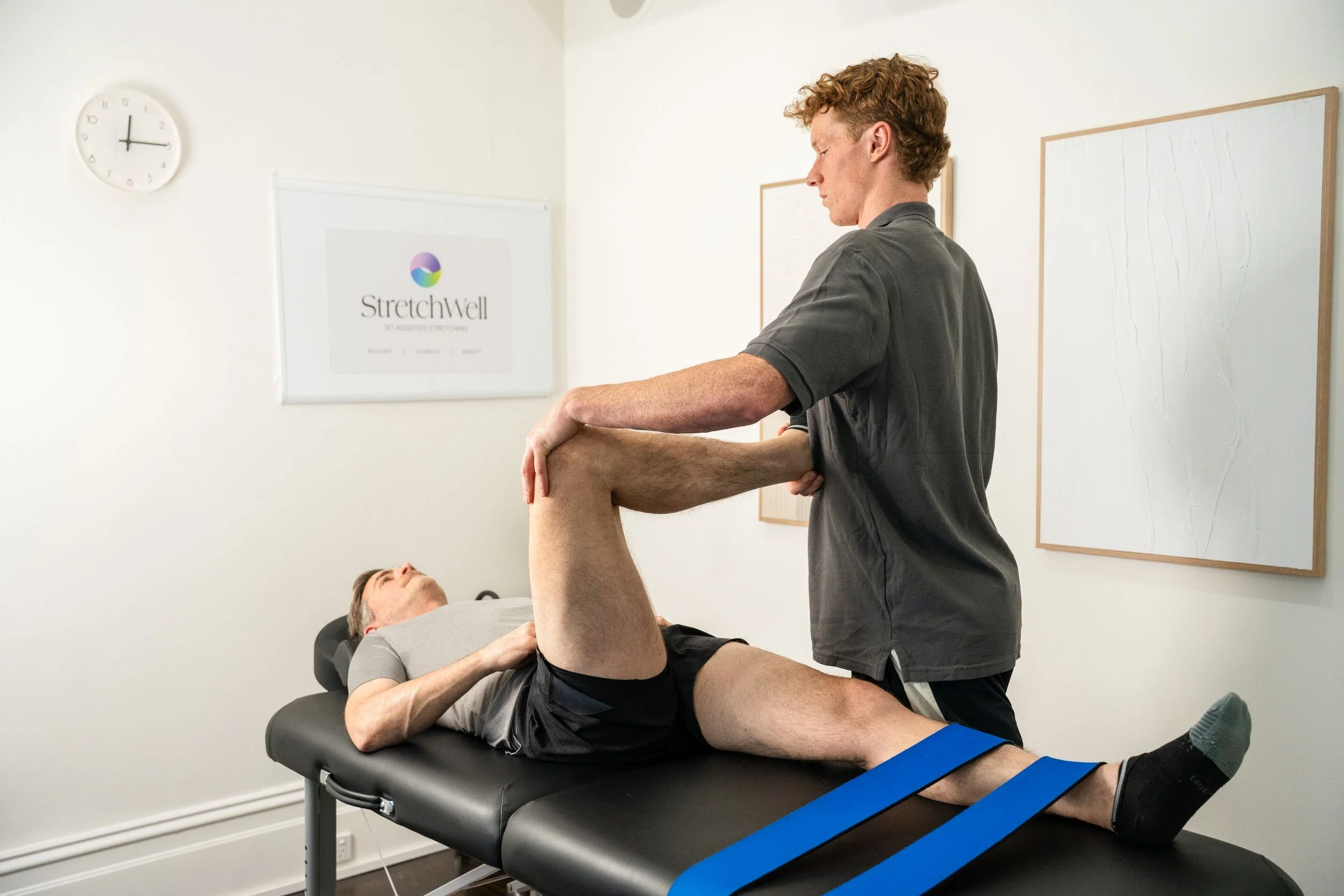
That's where assisted stretching comes in. At StretchWell in Northcote, a therapist moves your leg or arm through the stretch while you relax, supports the rest of your body so nothing else can cheat, and often uses PNF, which combines a brief gentle contraction with the stretch to help you get past the point where you'd normally stop.
If your regular loop is the Merri Creek Trail, Yarra Boulevard or the Capital City Trail, you probably know the feeling of climbing off the bike with hips that have set solid. Here's how riders tend to use a session:
Targeted Stretch (25 minutes): a good fit when one area is the problem, such as hips, hamstrings and glutes after a big week.
Full Body Stretch (50 minutes): covers everything from your calves to your neck and shoulders, which suits riders who feel tight all over.
Ultimate Full Body Stretch (80 minutes): a full-body stretch combined with Theragun percussion therapy, for when you want a proper reset.
You can see session details and pricing here, and our post on what to expect at your first session walks through the whole thing. Assisted stretching isn't a treatment for injuries and it doesn't replace a good bike fit or some strength work, but it pairs well with both, and our sports recovery page explains how it fits around training.
Stretching for cyclists: FAQs
Should cyclists stretch before or after a ride?
Both, in different ways. Before a ride, do a few minutes of easy spinning and dynamic movements such as leg swings and hip circles. After the ride, while your muscles are warm, do longer static stretches held for 20 to 30 seconds each.
What are the best stretches for cyclists?
The ones that undo the riding position: a half-kneeling hip flexor stretch, quad stretch, hamstring stretch, figure-four glute stretch, child's pose, a doorway chest stretch, an upper trapezius neck stretch and a calf stretch.
Why do my hips feel so tight after cycling?
Your hip flexors spend the whole ride in a shortened, folded position, while your quads and glutes work hard through thousands of pedal strokes. Without stretching or time off the bike, they can stay short and feel stiff when you stand up.
What helps lower back pain from cycling?
A combination of things: stretching the hips, hamstrings and glutes, strengthening your core and glutes, changing position regularly, and checking your bike fit. If the pain travels down your leg, brings numbness or tingling, or follows a fall, see your GP or physio.
Can stretching fix neck pain from cycling?
It can ease it, but position matters just as much. Relax your arms, vary your hand positions, check your reach and strengthen your mid-back alongside regular neck and chest stretches.
How long should cyclists hold each stretch?
Twenty to thirty seconds is a good standard, up to a minute for particularly tight spots. Stretch to a firm, comfortable pull rather than pain.
How often should I stretch if I ride regularly?
Aim for the routine after longer rides and at least three times a week overall. A shorter version on rest days keeps your hips and back moving.
Is assisted stretching good for cyclists?
Many riders find it useful because a therapist can support your body and reach areas that are hard to stretch alone, such as the hips and glutes. There's no fixed rule for how often to book. Some riders come around big events or heavy training blocks, others fit one in monthly, and your therapist can suggest a rhythm after your first session.
Give your legs, hips and back a proper reset
If your hips and lower back are still protesting after a few weeks of the routine above, or you'd simply love someone else to do the hard work for a change, book an assisted stretching session at StretchWell in Northcote. Tell us what your riding week looks like and we'll build the session around it.
This article is general information and isn't a substitute for medical advice. If you have ongoing pain, numbness or weakness, speak with your GP or physio.
Related Posts