Best Stretches to Do Before Flying Long-Haul
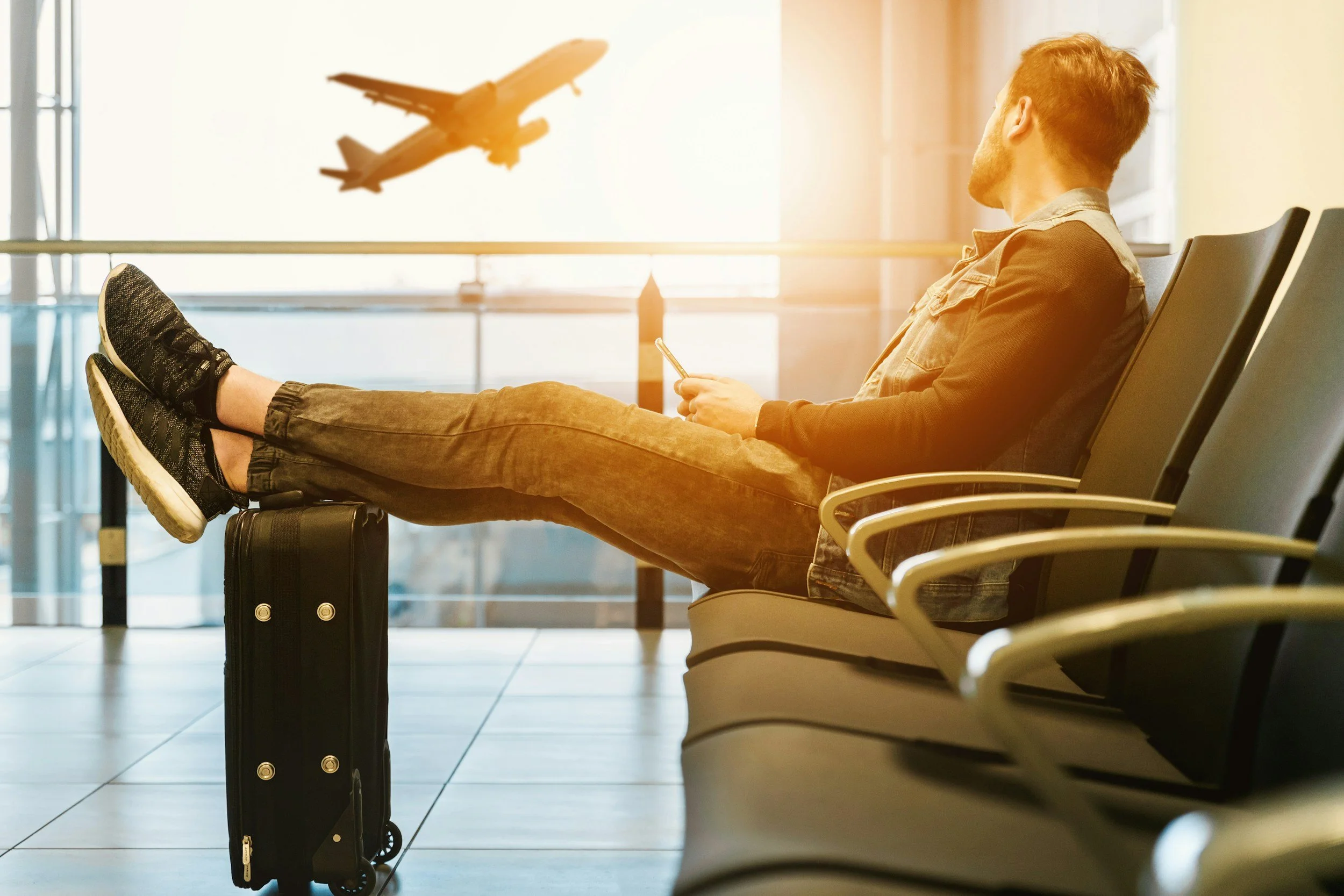
Long-haul flights are hard on your body in ways a lot of people don't think about until they're three hours in, stuck in a middle seat with no room to move. The good news is that a bit of preparation before you even get to the airport can make a real difference to how you feel both during the flight and when you land.
What are the best stretches to do before a long-haul flight? Focus on the areas most affected by prolonged sitting in a cramped seat: hip flexors, hamstrings, calves, chest, upper back, and neck. Stretching these areas beforehand helps your body start the flight in a looser, more comfortable state, which matters over many hours of limited movement. It's not a substitute for moving during the flight itself, which plays the bigger role in circulation and reducing blood clot risk, but it's a useful part of preparing for a long trip - and pairs well with a proper travel recovery session before or after you fly.
Why Long-Haul Flights Are So Hard on Your Body
Prolonged Immobility
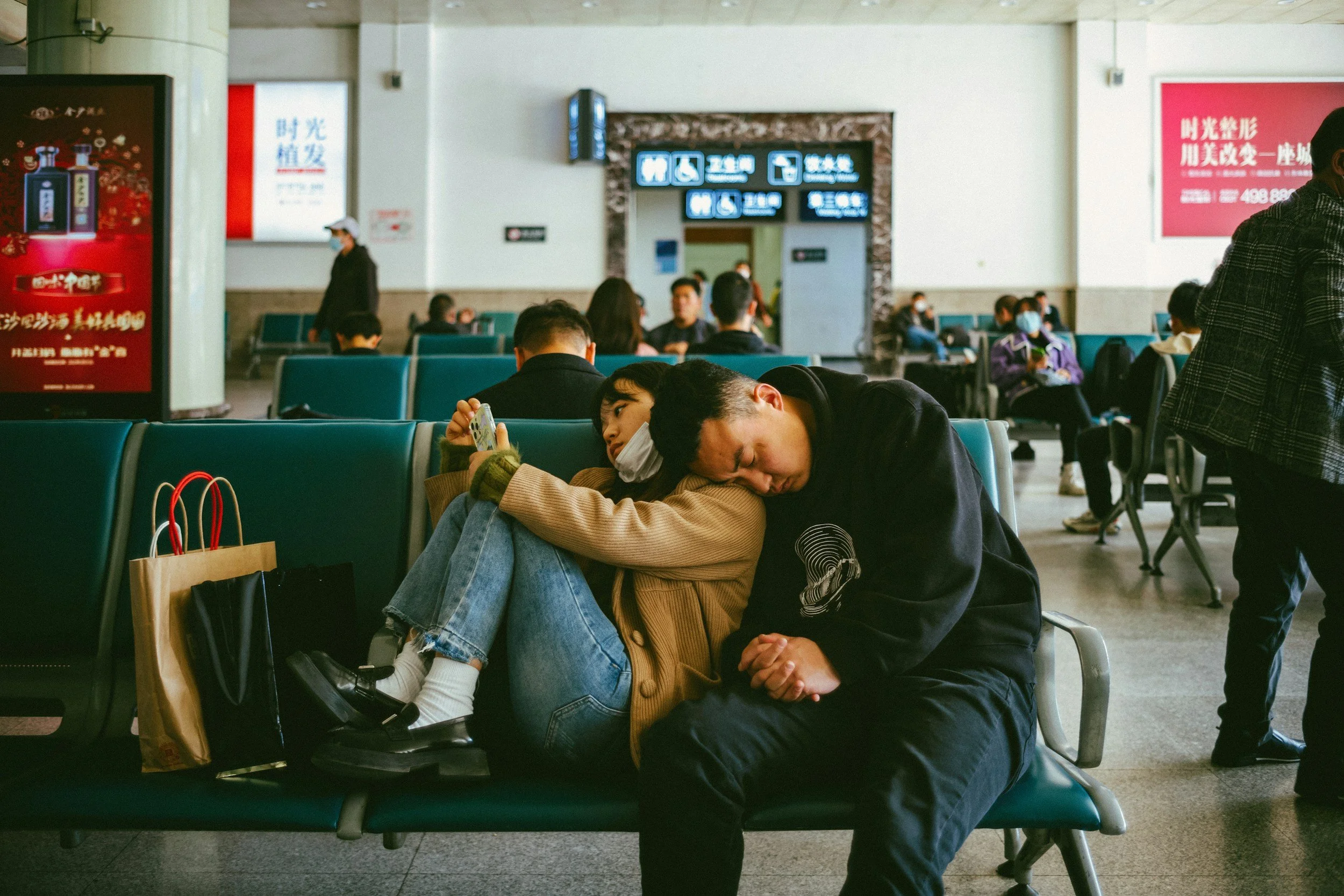
Sitting in one position for eight, ten, or even twenty-plus hours is simply not something the human body is built for. Even with good posture, extended stillness leads to stiffness, reduced circulation, and general discomfort.
Cramped Seating and Limited Legroom
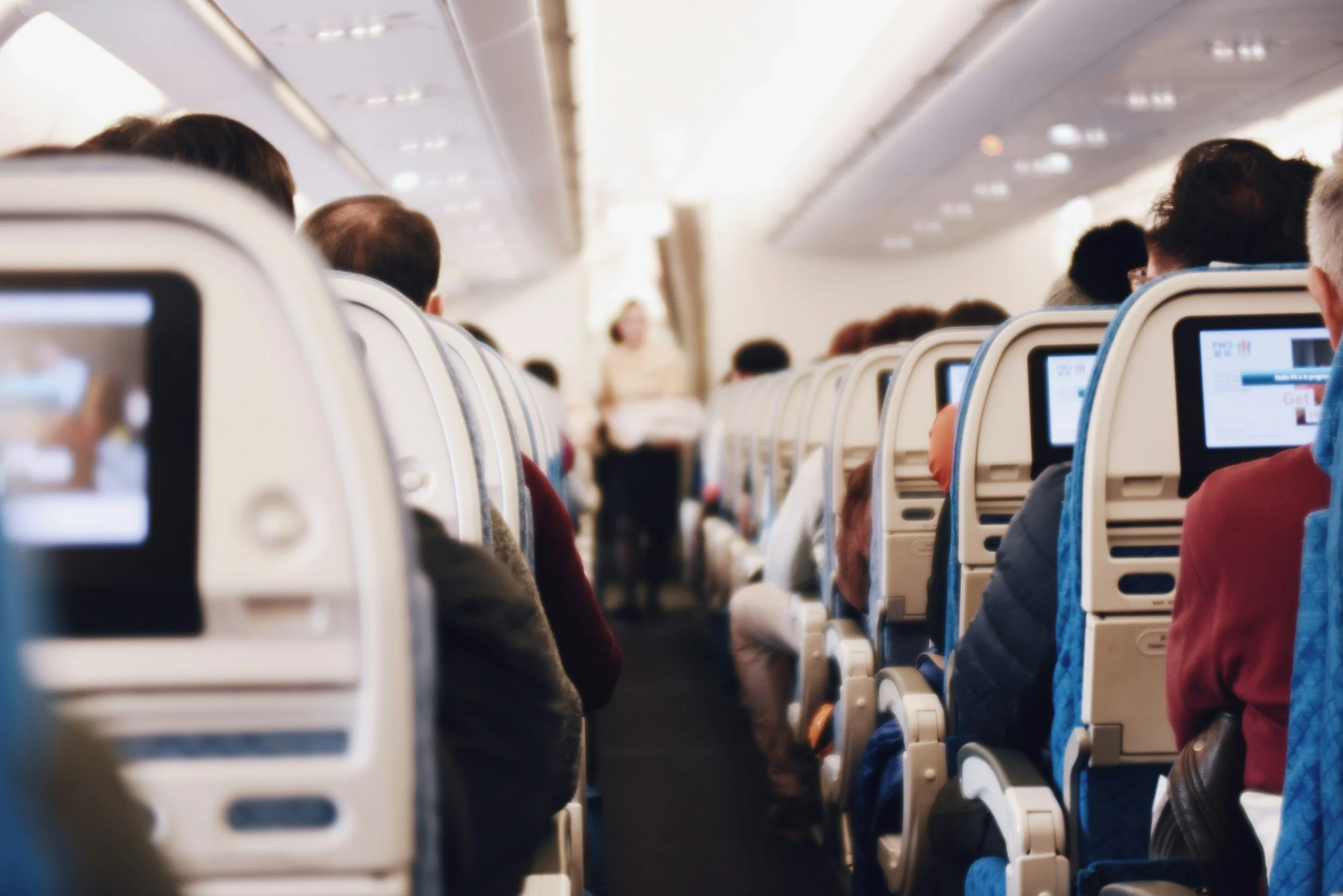
Economy seating in particular restricts how much you can move your hips, knees and legs, which compounds tightness that builds up over the course of a long flight.
Cabin Pressure and Dry Air
The low humidity in aircraft cabins contributes to dehydration, which can make muscles feel tighter and more fatigued than usual, on top of the effects of sitting still.
Awkward Sleeping Positions
Trying to sleep upright, or with your neck at an odd angle against a seat or window, is a major contributor to the neck and shoulder stiffness so many people feel after landing.
Best Stretches to Do Before Your Flight
These are stretches to do at home, in your hotel room, or even in the airport lounge before boarding — giving your body a better starting point for the hours ahead.
Standing Hip Flexor Stretch Step one foot forward into a gentle lunge position, keeping your back knee soft, and press your hips forward slightly until you feel a stretch at the front of your back hip. Hold 20–30 seconds each side. This is particularly useful given how much hip flexor tightness builds up from sitting for extended periods — the same pattern that shows up in our tight hips guide, just amplified by hours in a plane seat.
Standing Hamstring Reach With feet hip-width apart, hinge gently forward from the hips, letting your arms hang toward your feet, keeping a soft bend in your knees. Hold 20–30 seconds. Tight hamstrings are one of the most common complaints after long periods of sitting, since they stay in a shortened position the entire flight.
Calf and Ankle Stretch Standing at a wall or chair for balance, step one foot back and press the heel down, keeping the back leg straight, to stretch the calf. Follow with a few slow ankle circles each direction. Calf and ankle mobility matters more than people realise for long-haul flights, given how much of your lower leg circulation depends on regular movement.
Doorway Chest Opener Stand in a doorway with your forearm on the frame at shoulder height and gently lean forward to open the chest. Hold 20–30 seconds each side. This helps counter the rounded, hunched position most people fall into a few hours into a long flight.
Seated or Standing Spinal Twist Sitting tall or standing, gently rotate your upper body to one side, holding briefly before returning to centre and repeating on the other side. This is a great one to repeat periodically during the flight too, since it's easy to do from your seat.
Neck Stretches Gently tilt one ear toward your shoulder, holding 20–30 seconds each side, followed by a few slow, controlled neck rotations. Preparing your neck before a long flight can help reduce how much stiffness builds up from an awkward sleeping position in the air.
Simple Movements to Keep Up During the Flight
Pre-flight stretching sets you up well, but staying comfortable — and reducing your risk of deep vein thrombosis (DVT) — depends much more on what you do during the flight itself. According to the American Society of Hematology, blood clots during air travel are linked to prolonged immobility in cramped conditions, with the risk increasing the longer the flight, and walking or changing position regularly is one of the most effective ways to reduce that risk.
A few simple things to build into a long flight:
Get up and walk the aisle every couple of hours where possible, particularly on flights of four hours or longer
Ankle pumps and circles — lifting your toes and heels alternately, or rotating your ankles, done regularly from your seat
Seated marches — gently lifting one knee at a time toward your chest
Stay hydrated — cabin air is dry, and dehydration can make both stiffness and clotting risk worse
Avoid excess alcohol or caffeine, which can contribute to dehydration over a long flight
A Note on DVT Risk
Most people can fly long-haul safely with sensible movement and hydration habits. However, if you have a history of blood clots, a family history of clotting disorders, are pregnant, have had recent surgery, or have other risk factors, it's worth speaking with your doctor before a long flight about additional precautions such as compression stockings — pre-flight stretching and in-flight movement are very helpful general habits, but they're not a substitute for medical advice if you're in a higher-risk category.
Why Visit StretchWell Before You Fly
A pre-flight assisted stretching session takes the preparation above to a deeper level than you can achieve alone. Rather than a few stretches at home, your therapist guides your body through a full, supported release of the hips, hamstrings, calves, chest and neck — the exact areas that tighten up most over a long flight — so you're starting your trip from a looser, more comfortable baseline rather than already carrying tension before you've even boarded.
This is particularly worth considering if you already deal with tightness in your lower back, notice sciatic-type tightness after sitting for a while, or find your knees feel stiff and restricted after long periods without moving — all of which tend to be amplified by hours in an airplane seat.
Why Visit StretchWell After You Land, Too
Preparing beforehand is only half the picture. Landing after a long flight often means dealing with tight hips, a stiff lower back, sore hamstrings, and general full-body stiffness that a good night's sleep doesn't always fully fix — we've covered that side of things in more detail in our guide to reducing stiffness after a long flight. Booking sessions both before and after a big trip enhances the effect of each: you land in better shape because you started better prepared, and you recover faster because you're addressing the specific tightness travel creates, rather than just waiting for it to resolve on its own.
Getting Ready for Your Next Long-Haul Trip
Whether you're heading overseas for a holiday or a work trip, giving your body a bit of preparation beforehand — through simple stretches, or a proper assisted stretching session — makes a real difference to how you feel both on the plane and when you arrive.
Book a pre-flight (or post-flight) assisted stretching session at StretchWell in Northcote and recover faster after a long haul flight.
FAQs
What are the best stretches to do before a long-haul flight? Focus on the hip flexors, hamstrings, calves, chest, upper back and neck — the areas most affected by hours of sitting in a cramped seat. A standing hip flexor stretch, hamstring reach, calf stretch, chest opener, spinal twist and neck stretch are all good options to do before you leave for the airport.
Does stretching before a flight prevent DVT? Not on its own. Pre-flight stretching helps prepare your muscles and can support general comfort, but movement during the flight — walking the aisle, ankle pumps, staying hydrated — plays the bigger role in reducing DVT risk, according to the American Society of Hematology.
Should I stretch during the flight too? Yes — seated stretches, ankle circles, and getting up to walk periodically all help with circulation and reduce the stiffness that builds up over a long flight.
Is assisted stretching before a flight worth it? If you're prone to travel stiffness, or already deal with tightness in your hips, lower back or hamstrings, a pre-flight assisted stretching session can help you start your trip from a much more comfortable baseline than stretching alone.
Should I book a session before my flight, after, or both? Both, if you can. A pre-flight session helps you travel more comfortably in the first place; a post-flight session helps you recover faster once you land — together they enhance each other rather than one replacing the other.
Who should be extra careful about DVT risk when flying? Anyone with a personal or family history of blood clots, recent surgery, pregnancy, or other risk factors should speak with their doctor before a long flight about additional precautions.
Related Posts