5 Knee Stretches to Improve Mobility
Knee stiffness rarely starts at the knee itself — it's usually the muscles around it (the quads, hamstrings and calves) that are actually tight and limiting how freely your knee moves. Here are safe stretches to try at home, and why the knee in particular benefits from a guided approach.
What stretches help improve knee mobility? Stretching the muscles surrounding the knee — quads, hamstrings and calves — is generally the most effective way to ease everyday knee stiffness, since the knee joint itself has limited soft tissue to stretch directly. The stretches below are a safe starting point for general tightness, not for an acute injury or swelling.
Why Knee Stiffness Is Usually a Surrounding-Muscle Problem
The knee is a hinge joint with relatively little muscle tissue of its own — most of what affects how it feels and moves comes from the quads, hamstrings, calves and hip flexors that cross it. Tightness in any of these can restrict how freely your knee bends and straightens, which is why effective knee stretching almost always targets the muscles around the joint rather than the knee itself.
5 Knee Stretches to Try at Home
These are safe, general stretches for everyday knee stiffness. They're not suitable if you have swelling, recent injury, or diagnosed joint damage — stop immediately if you feel sharp pain, and check with your doctor first if you're unsure.
1. Standing Quad Stretch
Standing near a wall or chair for balance, bend one knee and bring your heel toward your glute, holding your ankle or foot gently. Keep your knees close together. Hold 20–30 seconds each side.
2. Seated Hamstring Stretch
Sit on the edge of a chair with one leg extended and heel on the floor, toes up. Keeping your back straight, hinge gently forward from the hips until you feel a stretch behind the thigh. Hold 20–30 seconds each side.
3. Wall Calf Stretch
Stand facing a wall, step one foot back and press the heel down, keeping the back leg straight. Lean gently into the wall until you feel a stretch through the calf. Hold 20–30 seconds each side.
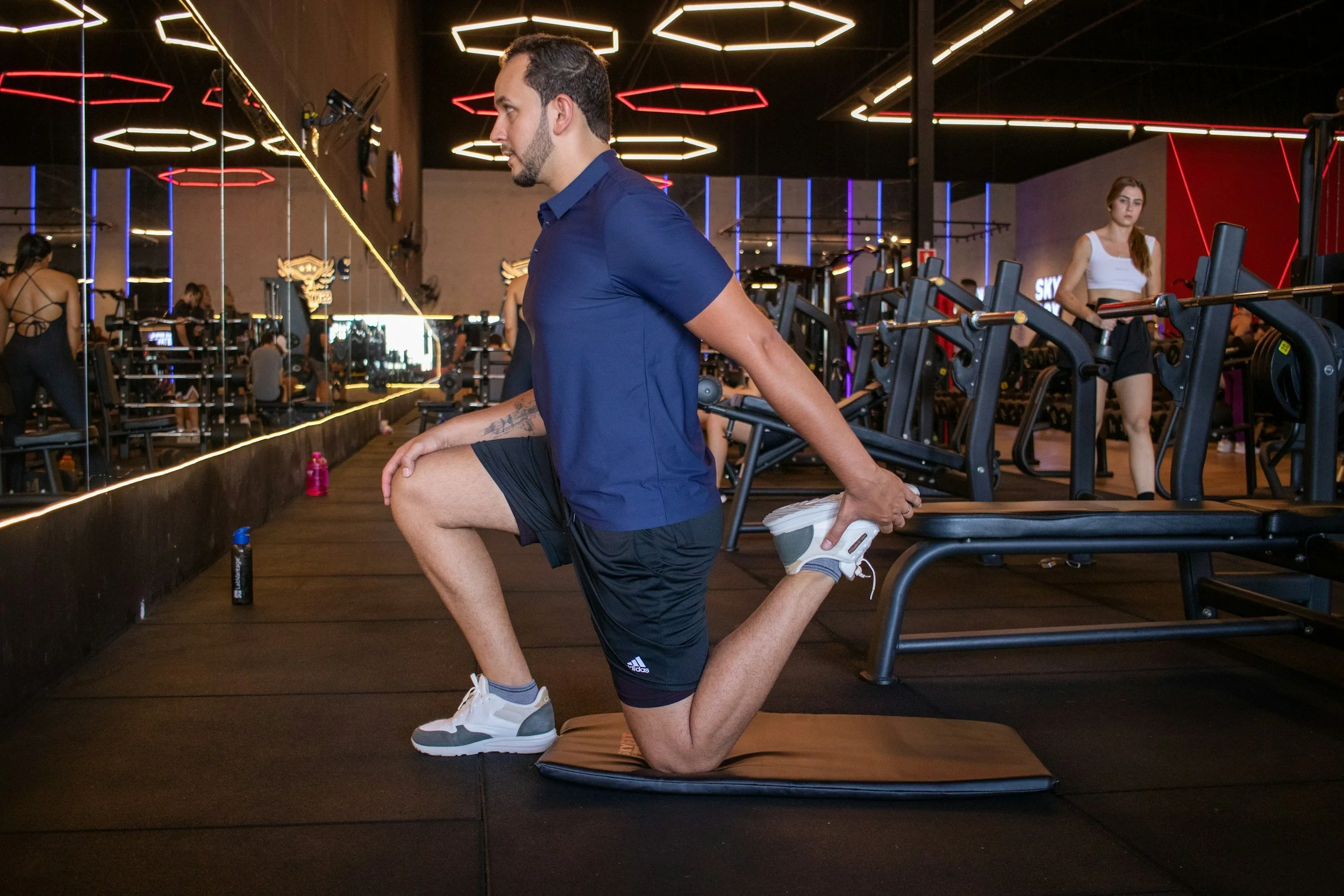
4. Kneeling Hip Flexor Stretch
From a half-kneeling position (one knee down on a cushion, other foot forward), gently press your hips forward until you feel a stretch at the front of the hip on the kneeling side. Hold 20–30 seconds each side.
5. Standing IT Band Stretch
Cross one leg behind the other and lean your hips gently to the side away from the back leg, feeling a stretch along the outside of the thigh. Hold 20–30 seconds each side, keeping the movement gentle.
Why These Help, But Have Limits
Because knee mobility depends on several different muscle groups working together, it's easy to stretch one area (say, the quads) while under-stretching another (the hamstrings or calves) without realising the imbalance. Self-stretching also makes it hard to fully relax into a position while controlling your own balance and leg placement at the same time.
How Assisted Stretching Helps Knee Mobility
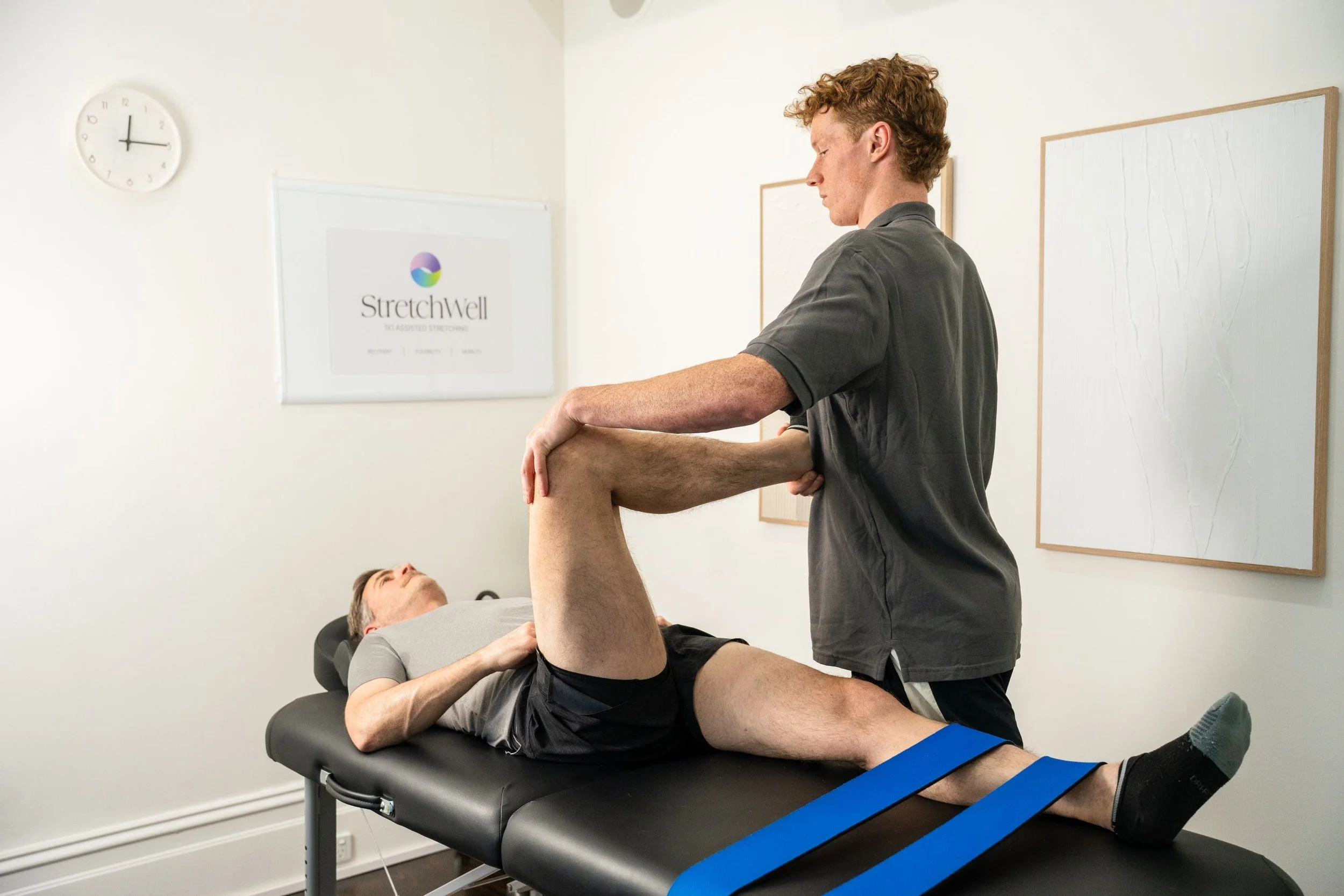
During an assisted stretching session, your therapist works through the quads, hamstrings, calves and hip flexors together, rather than one area at a time, addressing the full picture around the knee rather than whichever muscle happens to feel tightest that day. This is particularly useful if you're managing knee stiffness from training, prolonged sitting, or simply getting older and noticing reduced mobility.
A Note on Safety
The stretches above are for general stiffness, not pain from an injury. If you have swelling, recent knee surgery, a diagnosed ligament or cartilage issue, or sharp pain during movement, please see a doctor or physiotherapist before stretching.
Getting Started
If general knee stiffness is limiting how comfortably you move, the stretches above are a safe place to start. If tightness keeps building back up, or you want a more complete release across all the muscles affecting your knee, that's where assisted stretching makes the difference.
Book an assisted stretching session at StretchWell in Northcote and address knee stiffness at its actual source.
FAQs
What stretches help with stiff knees?
Stretching the quads, hamstrings, calves and hip flexors — the muscles surrounding the knee — is generally more effective than trying to stretch the knee joint itself.
Why does my knee feel stiff if nothing's wrong with the joint?
Knee stiffness usually comes from tightness in the surrounding muscles (quads, hamstrings, calves, hip flexors) rather than the joint itself, since the knee has relatively little soft tissue of its own to stretch.
Is it safe to stretch a stiff knee myself?
For everyday stiffness with no swelling or injury, generally yes, using gentle stretches like the ones above. If you have swelling, recent surgery, or a diagnosed joint issue, see a doctor first.
Why is assisted stretching better than stretching my knee area myself?
A therapist can work through all the muscles affecting knee mobility together in one session, rather than you guessing which area needs the most attention.
How often should I stretch to improve knee mobility?
Daily light stretching plus a weekly or fortnightly assisted stretching session tends to keep stiffness from building back up, particularly if you sit for long periods or train regularly.
Related Posts