Does assisted stretching actually work? And if it does, how long until you feel a difference? These are two of the questions I hear most often before someone books their first session, and they're fair ones. Nobody wants to spend their time and money on something that takes a year to show up!
I can't give you a one-size-fits-all timeline, but I can tell you the patterns I see again and again in the studio in Northcote. This isn't a roundup of other people's opinions. It's what I watch happen on the table, session after session.
A quick note on scope: if you're wondering how often to book, I've covered that in how often should you do assisted stretching, and if you're weighing up the cost, there's a full breakdown in is assisted stretching worth it. This post is only about timeframes and results.
The short answer: most people feel looser straight after one session, notice everyday movement getting easier after three or four, and see lasting changes in range of motion after two to three months of regular sessions. How quickly that happens depends on a few things, which I'll get to below.
What most people feel straight after one session
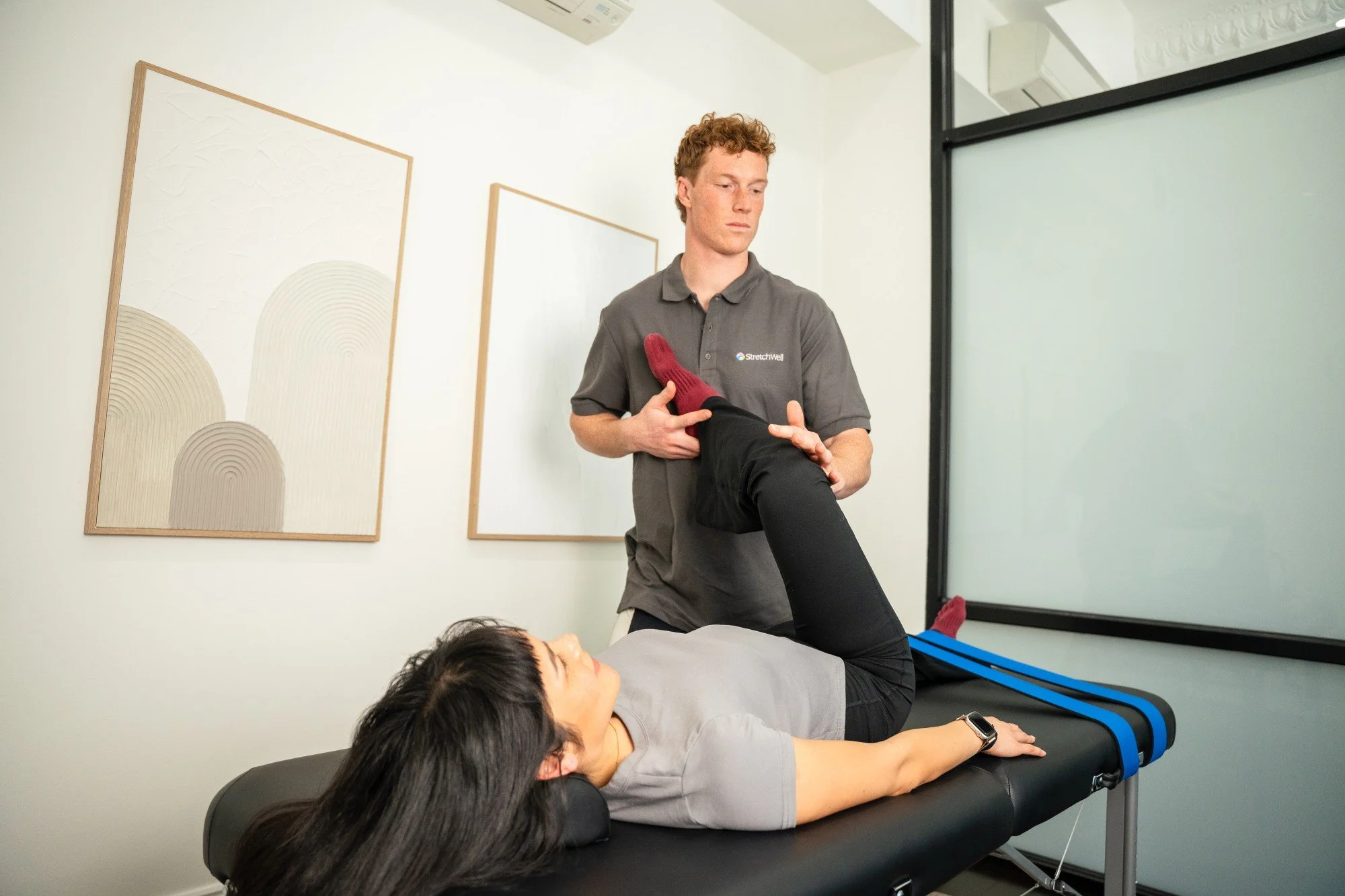
Most people tell me they feel looser, lighter and a little taller when they get off the table. The area we focused on usually moves more easily. Someone who walked in with tight hips can often take a bigger step, turn their head further, or reach overhead without that pinch. Plenty of people also say they feel unexpectedly calm, and sometimes a bit sleepy.
Part of this is simply that you got to relax completely while someone else supported your body. When you aren't holding yourself up or bracing, your muscles can let go further than they usually do when you stretch on your own. A lot of the early change in stretching also seems to come from your nervous system getting comfortable in a position, rather than your muscles physically getting longer, which is why it can show up so quickly.
Now the honest bit. This first change is real, but it's usually temporary. For most people the looseness fades over a day or two, especially if the next thing they do is sit at a desk for eight hours. Some people also feel a mild, workout-like achiness the next day, and that's normal. If you're curious what the session itself involves, our FAQs walk through what to expect.
What changes after 3-4 sessions
This is where things start to stick. By the third or fourth visit, the biggest shift clients describe is that the good feeling lasts longer. After the first session it might fade in a day or two. By session three or four, it's often several days.
They also start noticing it in ordinary life rather than just on the table. Getting out of the car without that catch in the hip. Putting socks on without a wobble. A morning that doesn't start stiff. Turning to check a blind spot. Clients often point these out to me before I've said a word!
On the table, I can feel it too. A hamstring or hip that used to guard and push back early in the stretch starts to let me take it further. It's less about dramatic physical change and more about your body getting used to a new range and trusting it.
How close together your sessions are makes a big difference at this stage, so it's worth reading how often to do assisted stretching if you're planning your first month.
What changes after 2-3 months
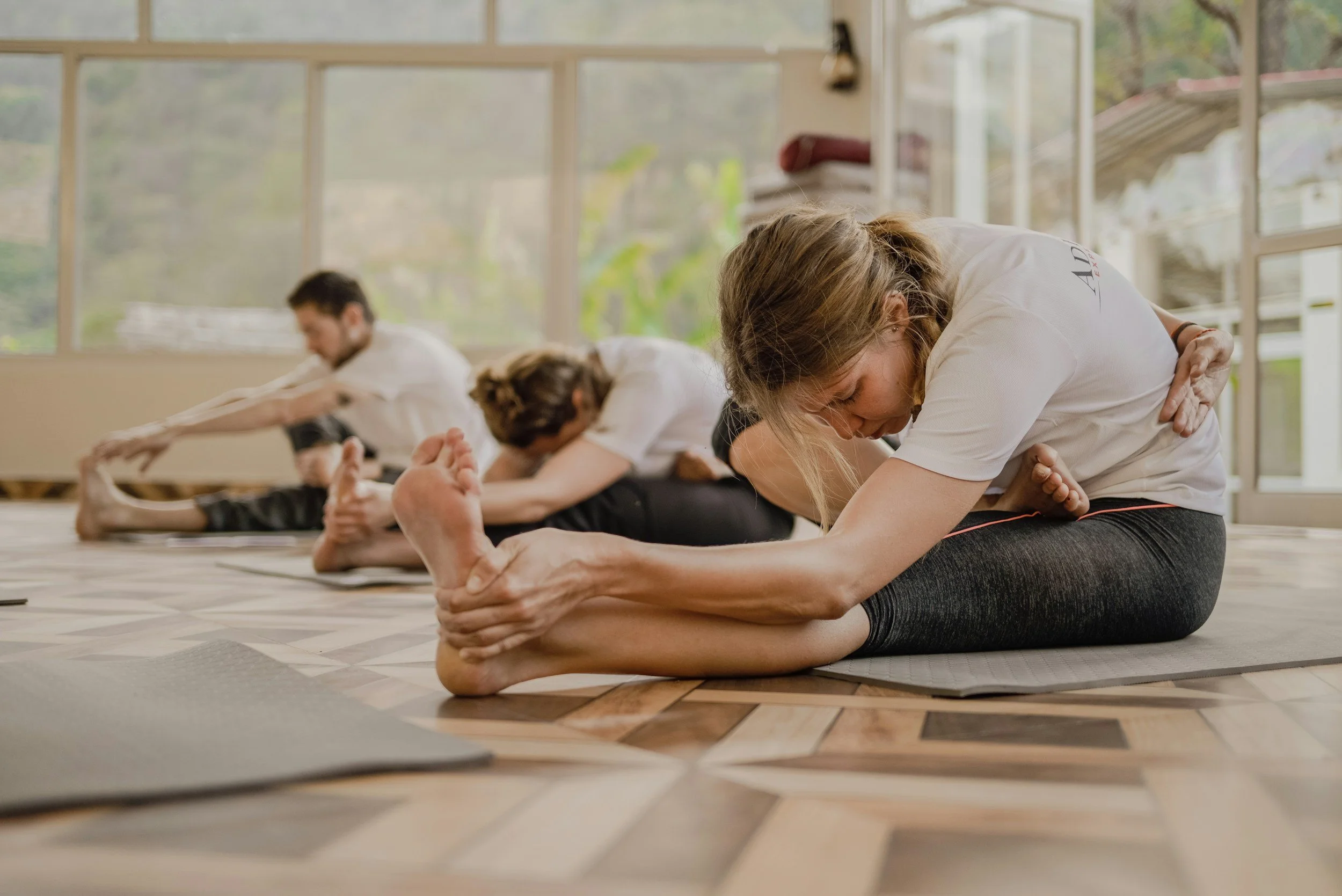
With regular sessions over two to three months, things move from 'feels better' to 'moves better'. This is when I see range-of-motion changes you can actually see: someone who couldn't get their hands past their knees reaching further, hips that sit more comfortably, shoulders that lift overhead without the body compensating.
The other thing clients describe is that their tight spots stop being the main character. The tension they came in with can still show up on a bad week, but it doesn't run their day anymore. They also become more aware of their bodies, noticing when they're hunching over a laptop or clenching their jaw, and letting go.
Progress at this stage is slower than in the first few sessions, and that's completely normal. The quick early gains come first, and the later ones are steadier and need more consistency. Plateaus happen. You can read more about how we approach range of motion on our flexibility page, and if you know you'll be coming for a few months, our StretchClub memberships are set up for exactly that kind of regular visit.
| When | What most people notice | What's usually still a work in progress |
|---|---|---|
| Straight after 1 session | Looser, lighter, easier movement in the area we worked on. Often calmer too. | The effect fades within a day or two |
| After 3-4 sessions | The good feeling lasts several days. Everyday movements feel easier. Less guarding during stretches. | Old patterns creep back if sessions are spaced far apart or desk time is heavy |
| After 2-3 months | Visible, longer-lasting changes in range of motion. Tight spots stay quieter. Better body awareness. | Progress slows down and needs ongoing sessions plus a little home maintenance |
What affects how quickly you progress
Two people can book the same number of sessions and have quite different timelines. These are the four things I see make the biggest difference.
Your starting flexibility. If you're very tight to begin with, you'll often notice the biggest changes early, simply because there's more room to move. If you're already quite flexible, you might feel less of a 'stretch' and more a sense of ease, and the goal shifts towards control and comfort rather than more range.
Your training load. Runners, gym-goers and anyone training hard often arrive tight because their muscles are working hard week after week. A session can take the edge off, but if your training load keeps climbing, tightness can keep pace with it. Stretching works best alongside strength work, not instead of it. Sports Medicine Australia's hamstring strain fact sheet recommends weekly training that includes both stretching and strengthening. If your hamstrings are the main culprit, our page on tight hamstrings goes into more detail.
Your desk time. This is the big one. If you sit for most of your working day, your hips, neck and upper back spend hours in the same position, and that's hard to undo with one session every week or two. ESSA's public-facing Exercise Right site suggests breaking up sitting by standing up for a couple of minutes every hour. In my experience, clients who do that make noticeably better progress. If your neck and shoulders take the brunt, have a look at our neck pain relief and office worker relief pages.
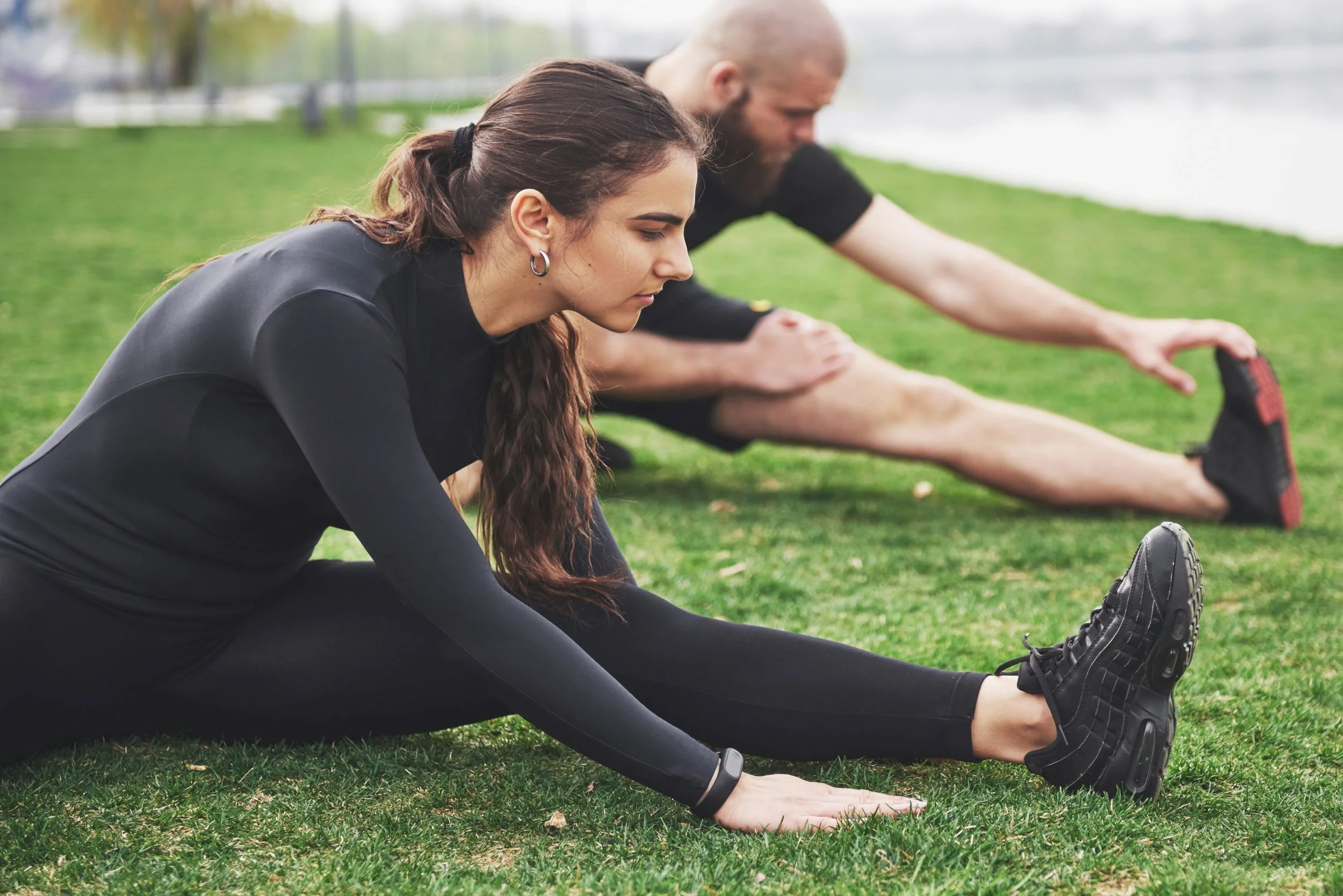
Your at-home stretching. I'm not going to hand you an hour of homework. Clients who do two or three moves for a few minutes, a few times a week, tend to hold on to their gains for longer between sessions. You don't need a long routine, just something you'll actually do.
What assisted stretching won't do
I'd rather you book with realistic expectations than feel let down, so here's the other side of the story.
It won't fix everything in one session. Feeling better after session one is great, but lasting change comes from repeating it.
It's not a substitute for strength training or general movement. It works best as one part of how you look after your body.
It's not a diagnosis or treatment for an injury. If you have sharp or persistent pain, or a medical condition, please see your GP, physio or an accredited exercise physiologist first.
It won't make everyone do the splits. Your joint structure, age and history all set limits, and a good session works with them rather than against them.
So, does assisted stretching work?
In my experience, yes, if you're realistic about what 'work' means. You can expect to feel looser quickly, notice real-life changes within the first month, and build lasting range over a few months with consistent sessions and a little effort in between. If you'd like to see how it feels for your body, you can read more about assisted stretching in Melbourne or have a look at the pricing and StretchClub memberships. I'd love to see you in the studio!
FAQs
Does assisted stretching work?
In my experience, yes, for what it is designed to do: helping you move more freely and feel less tight. Most people feel looser straight after one session, notice everyday movement getting easier after three or four, and see more lasting changes in range of motion over two to three months of regular sessions. It works best alongside strength training and regular movement, and it is not a treatment for injuries.
How long does it take for stretching to improve flexibility?
You'll usually feel a short-term difference after one session. More noticeable changes in everyday movement tend to show up after three or four sessions, and lasting changes in range of motion usually take two to three months of consistent sessions. Starting flexibility, training load, desk time and how much you stretch at home can all change that timeline.
Is assisted stretching worth it if I only try one session?
One session will give you a clear sense of how your body responds, and most people feel looser straight afterwards. That effect is usually short-lived, though, so longer-term results depend on regular sessions. For a full look at the value side, see is assisted stretching worth it.
Will I be sore after assisted stretching?
Some people feel a mild, workout-like achiness the next day, particularly after a first session or if they are very tight. It usually settles within a day or two. Sharp or lasting pain is not normal, so let your stretch therapist know and see your GP or physio if it continues.
What if I don't notice a difference after a few sessions?
Let your stretch therapist know. Progress is not always a straight line, and sometimes it comes down to adjusting the focus areas, session length or spacing, or working on desk habits and home stretches. If your tightness comes with pain, numbness or tingling, or doesn't change at all, it's worth getting checked by a GP or physio.
Related Posts